
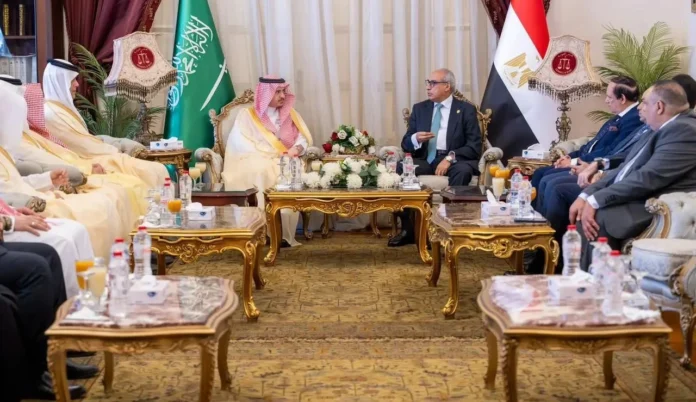
Saudi Arabia has joined the Arab Union of Administrative Judiciary as its 16th member, strengthening its regional judicial partnerships. Officials signed the accession document at the Egyptian State Council headquarters in Cairo on Sunday. The membership will create new opportunities for cooperation, professional development, and knowledge exchange among Arab administrative judicial institutions.
Ali Alohaydib, chairman of Saudi Arabia’s Board of Grievances and Administrative Judicial Council, signed the document. Mahmoud Abu El-Dahab, president of the Arab Union of Administrative Judiciary and chairman of Egypt’s State Council, signed alongside him. A senior Saudi judicial delegation attended the ceremony, together with Khalid Al-Shammari, Saudi Arabia’s deputy ambassador to Egypt, and senior Egyptian judicial officials.
Alohaydib said the accession reflects the standing of Saudi Arabia’s administrative judiciary across regional and international forums. He also highlighted the institution’s continuing development in judicial services, institutional capacity, and digital technology. According to Alohaydib, joining the union will help share Saudi judicial experience with other Arab institutions.
Furthermore, membership will expand opportunities for judicial specialists to exchange knowledge, research, and practical expertise. Alohaydib said these connections could support stronger institutional partnerships and encourage the adoption of effective administrative justice practices. He also emphasized the importance of sharing experiences that improve judicial performance and strengthen cooperation among member bodies.
Saudi Arabia’s accession also reflects the Board of Grievances’ efforts to develop its international relationships. Alohaydib highlighted the role of digital transformation in improving administrative judicial services and procedures. He added that artificial intelligence could support modernization efforts while helping institutions streamline their work.
Through the union, Saudi Arabia expects to expand its participation in regional and international judicial discussions. The membership also provides additional channels for exchanging expertise on administrative justice and institutional development. Consequently, Saudi judicial officials will have more opportunities to contribute their experience and learn from other Arab judicial bodies.
Alohaydib described the accession as another step toward deeper Arab cooperation in judicial and knowledge development. He also thanked King Salman and Crown Prince Mohammed bin Salman for their continued support of the Board of Grievances. According to Alohaydib, their support has helped the institution advance its work and strengthen its regional and international profile.
Following the signing ceremony, Abu El-Dahab accompanied Alohaydib on a tour of the Egyptian State Council’s historic headquarters. The building, located at Princess Fawkia Palace, provided a setting for further engagement between the two judicial leaders. They also exchanged commemorative shields to mark Saudi Arabia’s accession to the union.
Before Saudi Arabia joined, the Arab Union of Administrative Judiciary included 15 Arab judicial bodies specializing in administrative justice. Its newest member brings another national institution into the union’s network of professional cooperation. The expanded membership is expected to strengthen connections among participating institutions and support the exchange of judicial knowledge.
Saudi Arabia’s membership places greater emphasis on cooperation between Arab administrative judicial bodies. In particular, officials highlighted knowledge sharing, digital development, and improvements to judicial procedures as areas of potential collaboration. The accession therefore represents a new opportunity for Saudi Arabia to participate more actively in regional judicial initiatives.
The agreement also supports broader efforts to build institutional partnerships across the Arab world. Through continued dialogue and professional exchange, member bodies can share experience and discuss approaches to administrative justice. Saudi officials expect the partnership to contribute to the development of judicial expertise and strengthen the Kingdom’s engagement with regional institutions.
