
A newborn baby delivered hours after deadly Israeli strikes near a hospital in southern Lebanon became a symbol of “life and hope” for exhausted medical workers continuing operations despite widespread destruction.
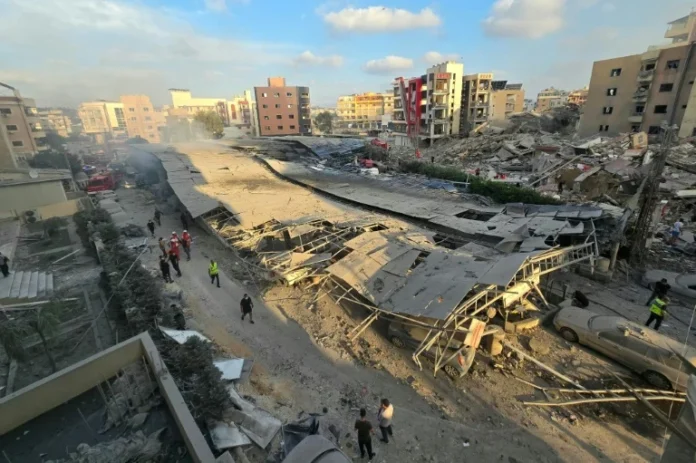
Lebanon’s health ministry said attacks near Jabal Amel Hospital in the city of Tyre killed four people and injured 127 others, including doctors, nurses and hospital staff. The facility also sustained extensive damage, with shattered glass, debris and collapsed sections affecting several departments.
Despite the destruction, medical teams resumed work shortly after the strikes, treating patients while workers cleared rubble from corridors and surrounding buildings.
One doctor at the hospital described the baby born the following morning as “a message of life and hope for the future”, saying the mother insisted on giving birth there despite the security situation.
Parts of the intensive care unit were damaged in the strikes, forcing some patients to be transferred within the hospital. Nearby buildings and parked vehicles were also destroyed as bulldozers worked to remove wreckage from the area.
Hospital administrators said the facility would continue operating despite the risks, stressing that healthcare workers remained committed to serving residents in southern Lebanon during the ongoing conflict.
According to the health ministry, several hospitals across the south have suffered damage since fighting between Israel and Hezbollah intensified earlier this year. Medical personnel and rescue workers have also been among those killed during the hostilities.
The World Health Organization said hospitals in the Tyre district are functioning under severe pressure as they deal with growing numbers of wounded civilians and repeated attacks near healthcare facilities.
For many staff members sheltering inside the hospital after losing their homes, the birth of the child offered a rare moment of relief amid the devastation.
“We continue because it is our duty,” one intensive care official said as crews repaired damaged sections of the hospital and patients continued arriving for treatment.
