
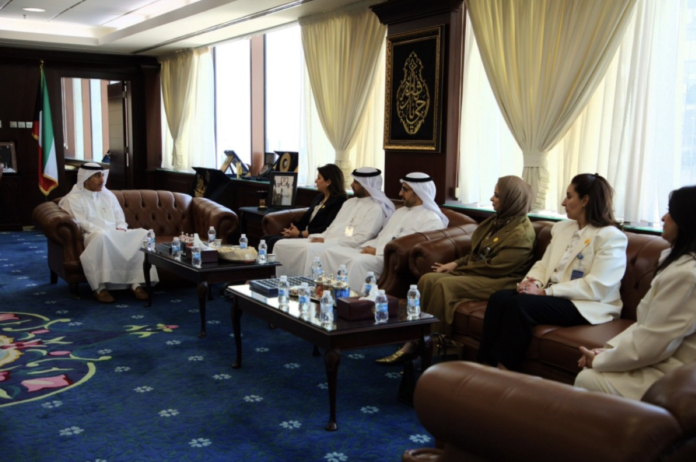
Kuwait anti-corruption efforts gained renewed focus after senior officials met to strengthen coordination between oversight and legal institutions. The discussions aimed to reinforce transparency and improve national governance systems across public sectors.
The Chairperson of the Kuwait Anti-Corruption Authority held talks with the head of the Fatwa and Legislation Department during an official visit to the department’s headquarters. The meeting formed part of ongoing engagement between institutions responsible for law enforcement, regulatory oversight, and legal development.
Officials reviewed ways to improve cooperation in developing stronger legal frameworks that support anti-corruption policies. They also discussed how updated legislation can close gaps that may allow corruption risks to persist within administrative systems.
Kuwait anti-corruption efforts also included a focus on improving institutional efficiency. Both sides emphasized that stronger coordination between legal and oversight bodies can enhance public trust. They also noted that clear laws and consistent enforcement play a key role in strengthening governance.
During the talks, participants examined how legal reforms can influence international perception indicators. They highlighted that improved transparency and accountability can help raise Kuwait’s standing in global governance rankings. This connection between legislation and international evaluation formed an important part of the discussion.
The head of the Anti-Corruption Authority stressed that the national strategy continues to move toward addressing corruption at its roots. He explained that the approach focuses on prevention, awareness, and stronger coordination between government entities. This strategy reflects a long-term vision for improving institutional integrity.
Kuwait anti-corruption efforts also depend on collaboration with legal institutions that draft and refine legislation. The Fatwa and Legislation Department highlighted its role in supporting national initiatives through updated laws and regulatory improvements. Officials noted that removing legal loopholes helps protect public funds and strengthen accountability.
In addition, both sides agreed that cooperation between oversight and legislative bodies remains essential. They emphasized that integration improves decision-making and enhances the effectiveness of anti-corruption measures. Regular communication between institutions helps identify challenges and develop practical solutions.
The meeting concluded with a shared commitment to continue joint efforts. Officials expressed confidence that ongoing coordination will strengthen governance systems and support transparency across public administration. They also highlighted the importance of sustained institutional engagement.
As Kuwait anti-corruption efforts continue to develop, authorities aim to expand collaboration across more government sectors. The goal remains to build a stronger framework that promotes integrity and reduces corruption risks in both policy and practice.
