

Kuwait national unity is on full display as citizens respond to ongoing Iranian attacks with symbolic gestures and social media campaigns. The movement highlights public solidarity, resilience, and support for front-line workers.
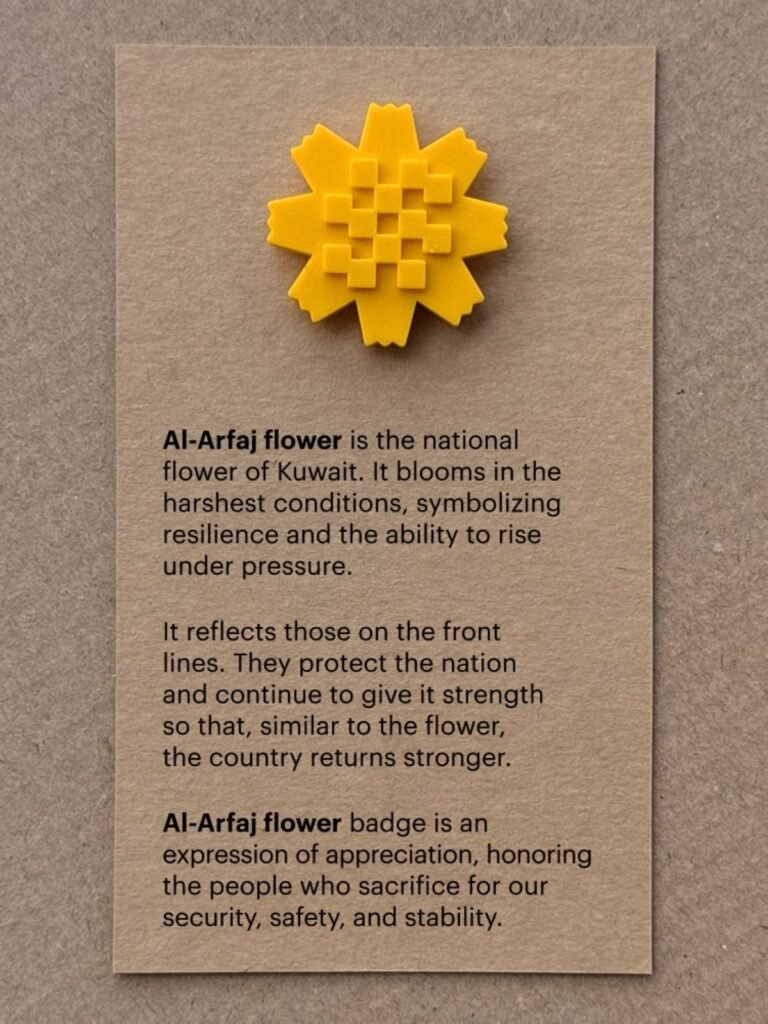
Over the past few days, a youth-led initiative has popularized the Al-Arfaj flower badge. The Al-Arfaj is Kuwait’s national flower, known for thriving under harsh desert conditions. Moreover, the badge honors front-line workers across all sectors and represents perseverance and strength.
Organizers explained that the flower symbolizes those who protect the nation. “The badge reflects people who continue giving strength, helping Kuwait rise stronger, like the flower,” they said. The campaign has inspired citizens both inside Kuwait and abroad to wear or 3D-print the badge.
Al-Arfaj badges are non-commercial. Anyone can reproduce them under a Creative Commons license. Printing houses, private companies, and retail outlets distribute them widely. Social media users have also shared photos documenting their efforts to get the badge, creating a sense of collective participation.
Psychologists say the initiative has deeper significance. Wearing the badge helps citizens manage stress and anxiety. It creates a feeling of belonging and control during uncertain times. Psychologist Khawla Albelali explained that symbols like this allow people to frame events through resilience and sacrifice rather than fear.
Simultaneously, a Kuwaiti flag with a prayer for the country’s safety has gone viral across WhatsApp, Instagram, and Snapchat. Thousands of users updated their status with the image, expressing pride and support. A Kuwait TV report highlighted the trend as a message to the world that people stand united behind the nation and its flag.
The campaigns emphasize that Kuwaitis are committed to supporting each other. They combine modern social media practices with traditional symbols of national pride. Moreover, the trends strengthen psychological resilience while promoting collective action.
Overall, the Kuwait national unity movement demonstrates how small symbolic acts can reinforce national identity and solidarity. Through badges, flags, and prayers, citizens show that Kuwait remains resilient, proud, and united in the face of external threats. The initiative highlights the country’s ability to respond creatively and collectively to crises.
The Kuwait national unity campaign continues to inspire both residents and Kuwaitis abroad. It fosters a sense of shared purpose and reminds everyone of the nation’s enduring strength.
