
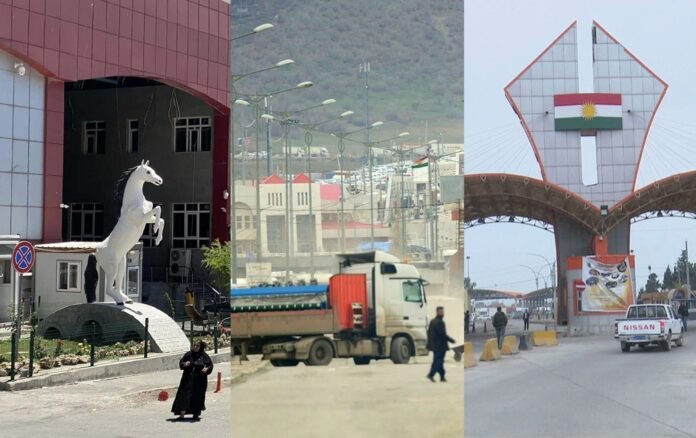
The Kurdistan Region announced that all major Kurdistan border crossings with Turkey and Iran will remain open during Iraq’s parliamentary elections. Officials confirmed that travel and trade will continue as usual, ensuring uninterrupted movement across the region.
On Monday, regional authorities told local media that the elections will not disrupt cross-border operations. Nationwide voting began on Tuesday, following early voting on Sunday for security forces and internally displaced persons.
Sirwan Hussein, spokesperson for the Haji Omaran crossing in Erbil province, said border activity will proceed normally. “Despite the elections, tourist and commercial traffic through our crossing with Iran will continue without interruption,” he explained. His statement reassured travelers and traders who rely on the route daily.
Likewise, Mariwan Karim, spokesperson for the Bashmakh crossing in Sulaimani province, confirmed that their operations will also remain unaffected. He added that maintaining open routes during national events supports economic stability. Such measures demonstrate the region’s commitment to keeping Kurdistan border crossings active and efficient even during major occasions.
In Duhok province, officials at the Ibrahim Khalil border crossing echoed the same stance. The crossing, which connects Kurdistan to Turkey, will remain open around the clock. Zakho’s mayor, Mushir Bashir, said the route will operate for 24 hours to accommodate both local and international travelers.
Meanwhile, Iraq’s Independent High Electoral Commission (IHEC) shared updates on voter turnout. The commission reported that early voting reached an impressive 82.42 percent. Over 1.1 million security personnel and nearly 27,000 internally displaced persons cast their votes across Iraq.
The general elections allow more than 21 million Iraqis to participate in choosing representatives for the 329-seat parliament. Among these seats, nine are reserved for minority groups. The IHEC emphasized that election logistics are proceeding smoothly across the country.
By keeping Kurdistan border crossings open, the regional government aims to balance security with economic continuity. The decision reflects careful planning and coordination with federal authorities. It also highlights the region’s awareness of how vital trade routes are for both daily life and broader economic growth.
As Iraq heads into an important political moment, the Kurdistan Region continues to demonstrate resilience and responsibility. Its steady management of borders ensures stability while supporting both citizens and visitors alike.
