
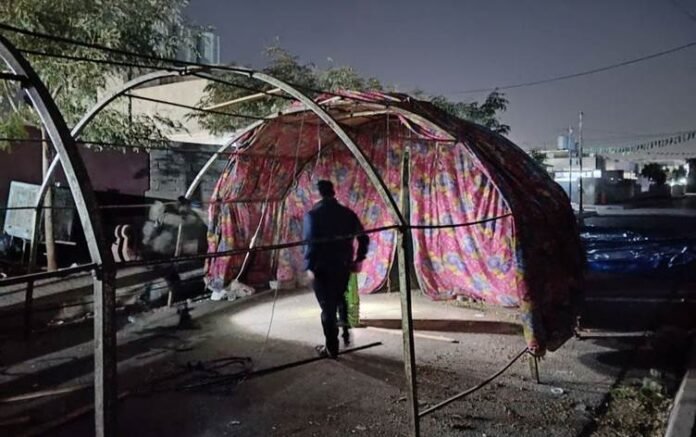
Residents of a Kurdish neighborhood in Kirkuk have ended a long-standing protest after army forces withdrew. The Kirkuk neighborhood dispute had lasted for more than two years, triggered by the military claiming ownership of several homes. Kurdish families said they had lived in the houses for decades, sparking tensions and ongoing demonstrations. Local authorities intervened to negotiate a resolution that allowed the residents to dismantle their protest tent.
Pre-dawn raids earlier this week escalated the crisis, as soldiers attempted to remove residents by force, reigniting community tensions. Fakhraddin Salih, a local representative, said the situation improved significantly following coordination between the governor and military leadership.
Salih explained that the army has withdrawn from most of the disputed homes, with only two houses currently under police control. He added that provincial officials expect a solution to be reached for the remaining properties soon. Negotiations led by Kirkuk Governor Rebwar Taha included direct communication with the Iraqi Chief of Staff to ensure a peaceful resolution.
The dispute intensified when soldiers raided five Kurdish homes in the southern Kirkuk neighborhood early Sunday. Many families said soldiers did not provide legal documentation authorizing the evictions, further inflaming the dispute.
Shawkat, one of the affected residents, described being removed from his home during the pre-dawn Ramadan meal. He said around 15 soldiers entered the house and used force when he refused to leave. “They claim the land belongs to them and refused to show any court ruling,” he said, highlighting the frustration of residents targeted in the operation.
Governor Taha visited the neighborhood hours after the raids and announced the army’s complete withdrawal. He confirmed that previous administrations had evicted families and emphasized the need for local oversight to resolve the issue fully. Taha said provincial authorities would continue supervising the situation to prevent further disputes.
The resolution marks a significant de-escalation in the Kirkuk neighborhood dispute, allowing residents to return to their homes and resume normal life. Local officials continue working with the military and community representatives to prevent future conflicts and ensure fair property management.
The Kirkuk neighborhood dispute demonstrates the importance of local governance and negotiation in resolving long-term community tensions. Authorities hope this intervention will serve as a model for addressing similar issues across multi-ethnic areas of Iraq.
