
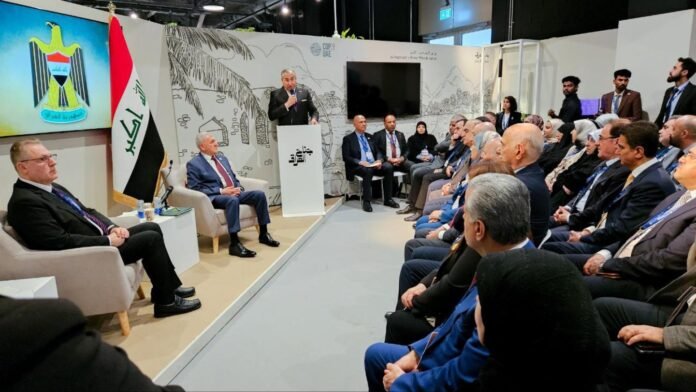
Iraq has launched a national carbon market to strengthen regional and international climate cooperation. The initiative highlights Iraq’s commitment to sustainability and global environmental protection.
At COP30 in Belém, Brazil, Iraq’s Minister of Environment emphasized that the carbon market supports regional and international climate cooperation. He stressed Iraq’s dedication to the Paris Agreement.
The market will link Iraq’s national efforts with international carbon trading systems. It aims to reduce emissions and encourage green investment. Moreover, it will help the country build a sustainable green economy.
Iraq faces severe environmental challenges, including water scarcity, drought, desertification, and biodiversity loss. The country has lost over 90% of its historical marshlands, affecting ecosystems and local communities.
Despite these challenges, Iraq is committed to ending routine gas flaring by 2028. It also plans to increase renewable energy production to 12,000 megawatts and improve oil sector efficiency.
Iraq submitted updated Nationally Determined Contributions (NDCs) outlining clear mitigation and adaptation strategies. The national carbon market complements these efforts and strengthens regional and international climate cooperation.
The initiative encourages youth and women’s participation, supports scientific research, and builds national capacities. Collaboration with the United Nations and other partners ensures global alignment.
Through the carbon market, Iraq aims to share expertise, reduce environmental costs, and achieve benefits with regional neighbors and the global community.
The launch marks a major milestone in Iraq’s environmental strategy. By prioritizing climate cooperation, Iraq addresses domestic challenges and positions itself as a global sustainability leader.
