
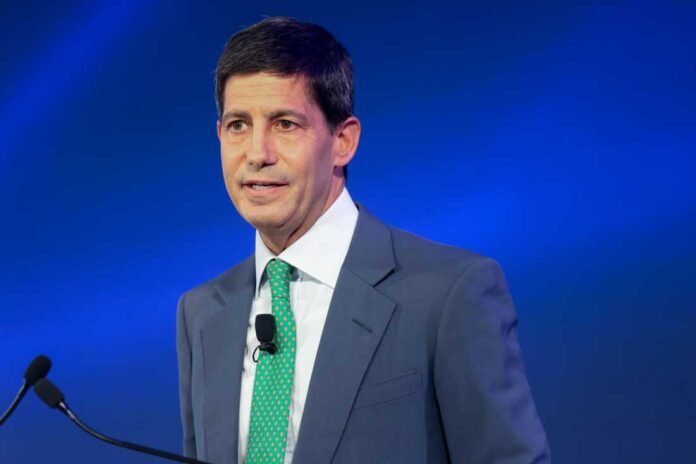
A tense confirmation hearing in the United States Senate Banking Committee put Federal Reserve independence at the center of debate. Kevin Warsh, nominee to lead the Federal Reserve, faced direct and sometimes sharp questions. However, he consistently stressed that he would protect the central bank from political pressure.
Warsh told lawmakers that he made no promises to Donald Trump regarding interest rates. Instead, he argued that economic decisions must remain separate from political influence. Moreover, he emphasized that presidents often prefer lower rates, yet the central bank must act independently.
During the hearing, senators examined his views on monetary policy and financial ethics. At the same time, they raised concerns about his personal wealth and potential conflicts. Nevertheless, Warsh maintained that his experience prepares him for the role. He also stated that leadership requires discipline and clear judgment.
Meanwhile, questions about the central bank’s autonomy dominated the discussion. In recent years, critics have raised doubts about whether political leaders influence financial decisions. Therefore, lawmakers pressed Warsh to clarify his stance. He responded by supporting Federal Reserve independence, although he acknowledged ongoing public debate.
In addition, Warsh avoided direct political confrontation when asked about past election results. He instead pointed to Congress’s certification of those results. Furthermore, he explained that the central bank should remain outside political disputes. This approach allowed him to balance neutrality with accountability.
At the same time, lawmakers revisited tensions between the White House and the central bank. Jerome Powell, who currently leads the Fed, has faced pressure over interest rate decisions. Consequently, this history shaped the tone of the hearing. Warsh addressed these concerns carefully while reinforcing his commitment to institutional integrity.
However, scrutiny extended beyond policy. Senators also explored the broader implications of leadership at the Fed. If confirmed, Warsh would become one of the wealthiest figures to hold the position. Even so, he insisted that personal wealth would not influence his decisions.
As the hearing continued, Warsh walked a careful line. He avoided direct criticism of political leaders, yet he defended the central bank’s authority. Ultimately, he returned to the importance of Federal Reserve independence as a guiding principle.
The confirmation process now moves forward with heightened attention. Lawmakers will weigh both his economic vision and his independence claims. Meanwhile, markets and analysts continue to watch closely. The outcome could shape future monetary policy in the United States.
