
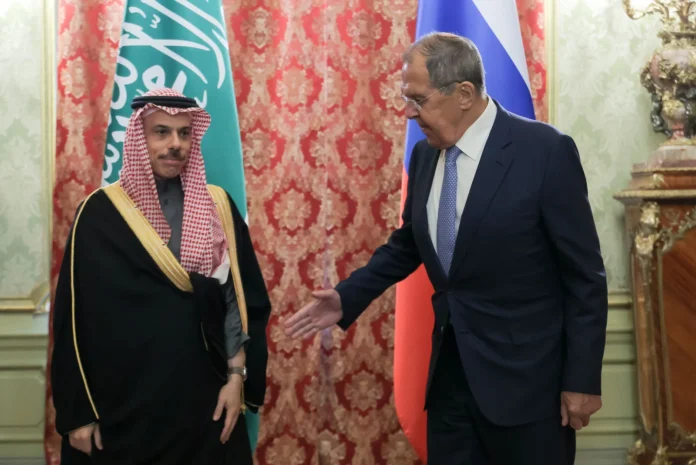
Energy cooperation between Saudi Arabia and Russia remains important for supporting stability across global energy markets, according to Saudi Foreign Minister Prince Faisal bin Farhan.
The minister highlighted the importance of Riyadh’s relationship with Moscow during a visit to Russia on Tuesday. He said cooperation between the two countries covers several political and economic areas, while energy remains a particularly significant field.
Saudi Arabia and Russia both participate in the OPEC+ alliance, which brings together major oil-producing countries to coordinate policies affecting global energy supplies. Their cooperation has therefore become an important part of broader efforts to maintain stability within international energy markets.
Speaking during meetings in Moscow, Prince Faisal said cooperation between the two countries had demonstrated its value in supporting global energy markets. He also pointed to the wider relationship between Riyadh and Moscow, which extends beyond energy into several other areas.
Meanwhile, Saudi-Russian relations have developed through regular political engagement and economic cooperation. Both sides continue to maintain dialogue on issues that affect their national interests and wider regional priorities.
The energy relationship carries particular importance because decisions by major producers can influence oil supply, market expectations and price stability. Consequently, cooperation between influential producers can play a significant role in responding to changes across international markets.
Energy cooperation also remains closely connected to the work of OPEC+, where Saudi Arabia and Russia hold influential positions. The alliance has sought to coordinate production policies among participating countries while responding to changing conditions in global oil demand and supply.
Furthermore, the relationship provides both countries with an established channel for discussing developments affecting the energy sector. Regular coordination can help producers assess market conditions and consider appropriate approaches as circumstances change.
Prince Faisal’s comments also reflected the broader scope of Saudi-Russian relations. He described cooperation as covering political and economic sectors, showing that bilateral engagement extends beyond their shared role within OPEC+.
At the same time, global energy markets continue to face changing conditions influenced by demand, production levels and wider economic developments. Major producers therefore continue to monitor international trends closely while maintaining communication with other key energy partners.
The Saudi minister’s remarks underline the importance Riyadh places on maintaining constructive relations with Moscow. They also highlight the role that coordination between major energy producers can play in supporting international market stability.
For Saudi Arabia, cooperation with Russia remains an important component of its engagement with major oil-producing countries. In addition, the partnership provides a platform for continued discussions on energy and broader economic interests.
Energy cooperation between the two countries is expected to remain a significant element of their bilateral relationship. Their shared participation in OPEC+ gives the partnership particular relevance as global markets respond to evolving supply and demand conditions.
Overall, Saudi Arabia and Russia continue to view their relationship as important across political and economic fields. Their coordination within OPEC+ also gives their partnership a wider role in efforts to support stability in global energy markets.
