
Archaeologists have uncovered a stunning discovery in northern Iraq as drought exposed dozens of long-buried sites. The newly unearthed ancient tombs in Iraq shed light on civilizations that thrived more than 2,000 years ago.
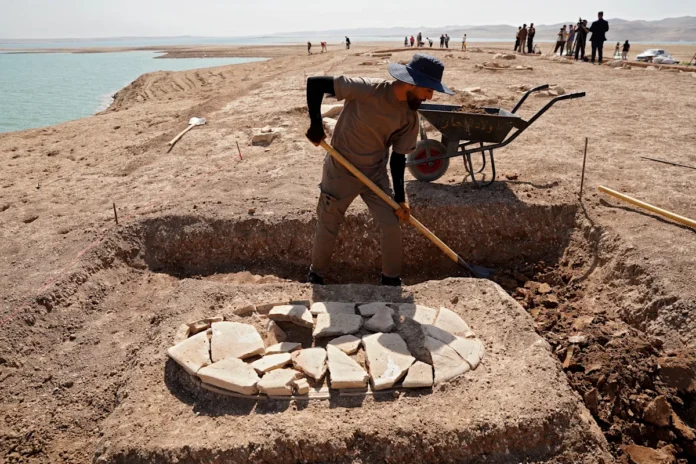
According to officials, around 40 tombs appeared on the banks of the Mosul Dam in the Khanke region of Duhok province. Experts believe the burial sites date back to the Hellenistic or Hellenistic-Seleucid period, making them over 2,300 years old.
The archaeological team first surveyed the area in 2023, spotting only fragments of some tombs. However, extreme drought this year dropped reservoir levels to their lowest, allowing detailed excavation. “The drought affects farming and electricity, but it enables us to continue excavation work,” said lead archaeologist Hasan Brefkany.
In previous years, other ruins also emerged around the Mosul Dam when water levels dropped. These discoveries highlight how climate pressures reveal hidden layers of Iraq’s ancient history. Moreover, they demonstrate the country’s vulnerability to climate change, which continues to cause rising temperatures and persistent droughts.
Iraq has suffered water shortages for five straight years, with reserves now at only 8 percent of full capacity. Authorities warn that this year marks one of the driest since 1933. In addition, officials accuse upstream dams in Iran and Turkiye of restricting the flow of the Tigris and Euphrates rivers. These rivers have long sustained Iraq’s agriculture and settlements.
Meanwhile, archaeologists continue carefully excavating the tombs before rising waters cover them again. The team plans to transfer the findings to Duhok Museum for study and preservation. This step ensures that the region’s history remains accessible despite environmental challenges.
Beyond archaeology, the drought highlights Iraq’s urgent water crisis. Agriculture, energy production, and daily life face severe pressure as climate patterns worsen. Still, from a scientific perspective, the harsh conditions unlock opportunities to explore new historical evidence.
In conclusion, the discovery of ancient tombs in Iraq offers a rare glimpse into forgotten civilizations. Although drought threatens the nation, it simultaneously uncovers treasures that enrich cultural knowledge. Ultimately, the continued excavation of ancient tombs in Iraq strengthens both history and heritage for future generations.
