
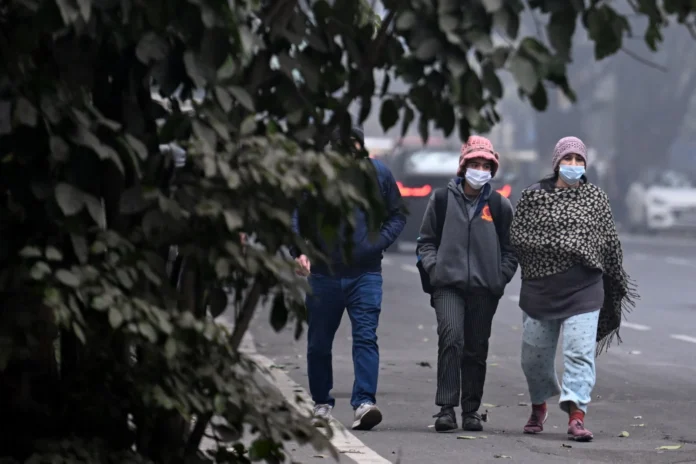
Delhi Pollution has prompted authorities to introduce tougher restrictions as the capital prepares for another difficult winter smog season. The new measures took effect on Sunday, November 1, targeting traffic emissions and other major pollution sources. Officials hope these steps will improve air quality across one of the world’s most polluted capitals.
Under the new rules, authorities have doubled parking charges to discourage unnecessary vehicle use. Government departments and private companies must also arrange work-from-home options for their employees. These measures aim to reduce daily commuting and limit the number of vehicles entering busy streets.
Additionally, officials will prevent vehicles that fail to meet required emission standards from entering the capital. Authorities have also prohibited demolition work and outdoor construction activities that generate dust. These restrictions seek to address pollution from transport, building projects and other urban activities.
Delhi Chief Minister Rekha Gupta’s office described the measures as part of the city’s winter action plan. The plan introduces stricter controls, stronger enforcement and continuous monitoring throughout the pollution season. Officials have urged residents to follow the new guidelines and support efforts to improve air quality.
The government has already introduced several restrictions during the weeks leading up to November. These include prohibiting rubbish burning and limiting food stalls that rely on coal or firewood. However, previous campaigns have struggled to prevent severe smog during the colder months.
Delhi usually experiences its worst pollution between November and January. During this period, lower temperatures and weather conditions can trap pollutants close to the ground. Consequently, harmful particles accumulate and create thick smog across residential and commercial areas.
Several sources contribute to the capital’s poor air quality. Vehicle exhaust, coal-fired power stations, industrial operations and construction dust all release pollutants. Furthermore, farmers in neighbouring states burn crop residue after harvesting, adding smoke to the regional atmosphere.
India’s environment ministry estimates that vehicles account for 23 percent of Delhi’s winter pollution. Biomass burning, including agricultural stubble fires, contributes another 20 percent. Meanwhile, industrial activity, including coal-based power generation, represents approximately nine percent.
Fine particulate matter known as PM2.5 presents a particular health concern. These extremely small particles can travel deep into the lungs and enter the bloodstream. As a result, prolonged exposure increases the risk of serious respiratory and cardiovascular problems.
During peak winter periods, Delhi’s PM2.5 concentration can exceed 300 micrograms per cubic metre. That level stands around twenty times higher than the World Health Organization’s recommended daily guideline. Last year, readings reached 846 micrograms per cubic metre at their highest point.
On Sunday, monitoring stations recorded PM2.5 levels of 201 micrograms per cubic metre. Although still more than thirteen times the recommended limit, recent intermittent rainfall may have helped lower concentrations.
The wider health consequences extend beyond the capital itself. A 2024 study estimated that air pollution contributed to approximately 3.8 million deaths across India between 2009 and 2019.
Delhi Pollution therefore remains a serious public health and environmental challenge despite repeated government interventions. The latest restrictions seek to reduce emissions while strengthening enforcement during the winter months. Their effectiveness will depend on consistent implementation and cooperation from residents, businesses and neighbouring regions.
