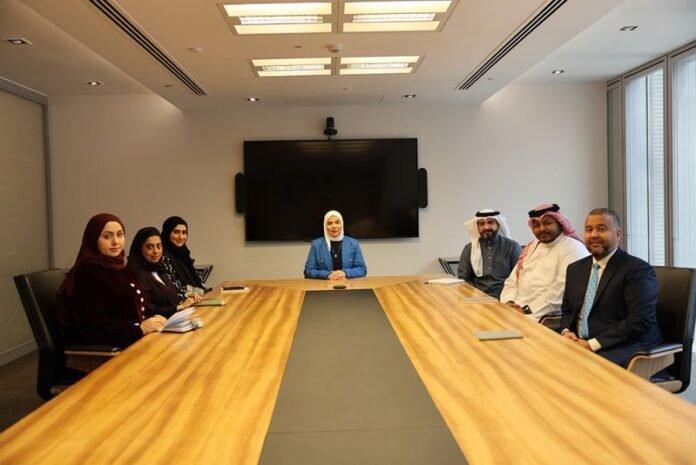
The Bahrain equal opportunities drive gained momentum as the Tender Board’s Equal Opportunities Committee held its first meeting for 2026. The session highlighted plans to promote workplace equality and support women’s advancement. Leaders stressed that the Bahrain equal opportunities drive aligns with the kingdom’s broader national objectives for institutional development and gender balance.
Chaired by Engineer Reema Issa Al-Saffar, Director of the Technical Evaluation Department, the meeting reviewed achievements from the past year. Committee members celebrated milestones in enhancing gender representation and promoting fair practices across departments. They emphasized that strategic planning and consistent monitoring are vital to the Bahrain equal opportunities drive.
During discussions, Al-Saffar noted the importance of sustaining progress. She outlined how initiatives directly impact employee development and organizational efficiency. By reinforcing equality principles, the Board encourages professional growth and leadership opportunities for women. Furthermore, these measures aim to integrate gender balance into everyday operations across all divisions.
The committee also set timelines for 2026 initiatives. Programs focus on mentoring, skill-building workshops, and enhanced recruitment policies. Members stressed continuous evaluation of workplace culture and performance metrics. Additionally, the Board plans to expand awareness campaigns to highlight equality achievements and motivate other government institutions to follow suit.
Experts attending the session emphasized that institutional reforms improve both employee satisfaction and productivity. By investing in equality and inclusion, Bahrain strengthens governance structures while promoting fairness. These reforms also reflect international best practices and demonstrate the kingdom’s commitment to sustainable workplace development.
Moreover, committee members discussed collaboration with academic institutions and private sector partners. These partnerships aim to develop targeted training programs and promote female leadership in traditionally male-dominated sectors. Officials highlighted that measurable outcomes, such as promotions and increased representation, would track progress.
Looking ahead, the Tender Board commits to monitoring all initiatives closely. By fostering accountability, transparency, and participation, the Board aims to make equality a standard rather than an exception. Observers say the Bahrain equal opportunities drive sets a strong precedent for national institutions and encourages other organizations to adopt similar frameworks.