
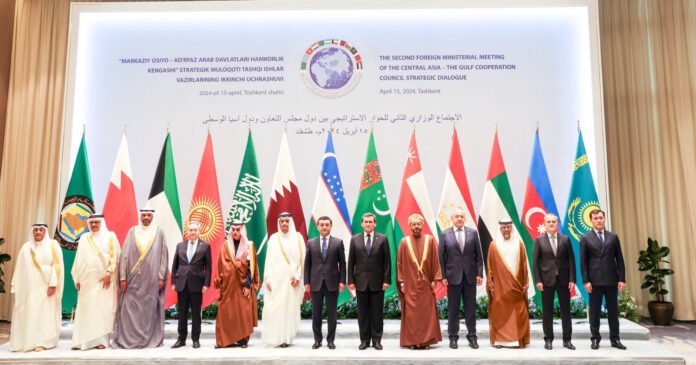
GCC economic integration remained the top priority as Oman took part in a major regional finance meeting held in Kuwait. The 73rd gathering of GCC finance undersecretaries opened discussions ahead of the 123rd Financial and Economic Cooperation Committee session. Representing Oman, Abdullah Salem Al-Harthy led the delegation from the Ministry of Finance. The talks aimed to align fiscal strategies across the region while accelerating common economic goals. Every country present emphasised the urgency of regional unity in the face of economic uncertainty.
Throughout the meeting, participants reviewed results from several influential committees responsible for shaping Gulf financial coordination. These included updates from the GCC Central Bank Governors Committee and the Customs Union Authority. Delegates also assessed findings from the Heads of Tax Authorities and the GCC Common Market Committees. Oman contributed to each topic by reiterating its commitment to stronger policy alignment. As a result, the discussion returned repeatedly to the core aim of GCC economic integration.
In addition, the meeting tackled the region’s ongoing free trade negotiations, which have gained momentum in recent months. Delegates exchanged technical updates on tariffs, regulatory standards, and legal frameworks. Oman stressed the need to finalise agreements that would remove trade barriers across Gulf borders. Furthermore, they considered new initiatives from the Economic and Development Affairs Authority, aimed at enhancing infrastructure and economic cooperation. By doing so, the group reinforced its shared focus on advancing GCC economic integration.
A major item on the agenda was the GCC Payment Linkage Agreement, designed to simplify cross-border financial transactions. Officials discussed the legal steps needed for signing and ratifying the deal in each member state. The proposed system could significantly lower transaction costs and improve access to banking services across the region. Oman welcomed the plan as a practical solution to support financial unity. Clearly, this proposal fits neatly within the broader framework of GCC economic integration.
Oman’s active engagement in Kuwait signalled its strong support for coordinated regional growth. Finance leaders agreed that past resolutions from the 122nd session required consistent implementation. They also warned that delays would hinder deeper cooperation and affect investor confidence. Despite challenges, the Gulf states continued to build consensus on tax policy, customs reform, and market integration. With each agreement reached, they moved closer to fulfilling the shared goal of GCC economic integration.
