
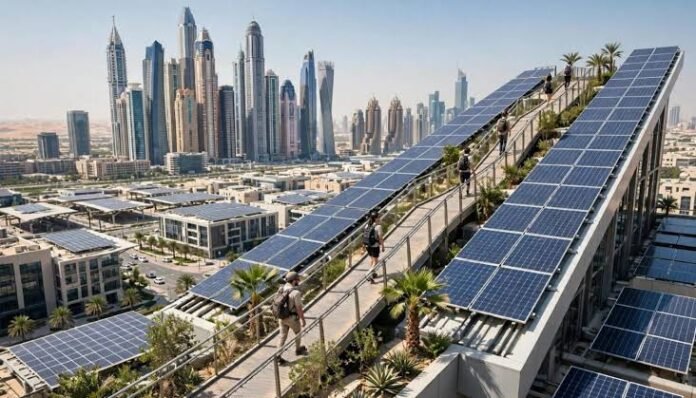
Solar Power Production forecasts position the UAE as the top global producer per capita by 2031. International Energy Agency reports project national solar electricity generation to surpass four thousand kilowatt-hours per individual. Furthermore, substantial infrastructure investments across regional energy markets drive rapid adoption of clean utility systems. Consequently, government authorities continue expanding large-scale solar projects to accelerate national economic diversification goals.
Meanwhile, regional partners Oman and Qatar also feature prominently within the top global solar rankings. Projections place Oman third worldwide, while Qatar secures fifth position among leading international clean energy producers. Additionally, all top ten nations will generate at least two thousand kilowatt-hours per person by 2031. Therefore, Middle Eastern economies lead worldwide transition efforts toward sustainable power generation over coming decades.
Furthermore, solar energy represents more than three-quarters of overall global renewable capacity expansion in upcoming years. Global energy analysts expect worldwide renewable electricity capacity to increase by nearly eighty-five percent by 2031. Moreover, the UAE government recently increased its official clean energy target to thirty-five percent by 2031. Consequently, official policy frameworks create lucrative opportunities for private sector participation in domestic utility projects.
Additionally, expanding Solar Power Production capabilities reinforces long-term environmental sustainability and economic resilience across the Gulf. Energy ministers emphasize that competitive bidding models lower electricity generation costs across regional grid networks. Furthermore, ongoing technology investments enable local utility companies to integrate advanced solar systems into existing infrastructure.
Therefore, international energy experts anticipate accelerated renewable market growth across all participating Middle Eastern countries.
In conclusion, ambitious renewable energy policies establish the Middle East as a global leader in clean electricity transition. Furthermore, expanding solar capacity reduces national reliance on traditional hydrocarbon resources for domestic power generation needs. Moreover, proactive government initiatives drive technological innovation and attract significant foreign investment into green energy sectors. Consequently, regional economies maintain a competitive advantage while supporting long-term global climate goals.
