
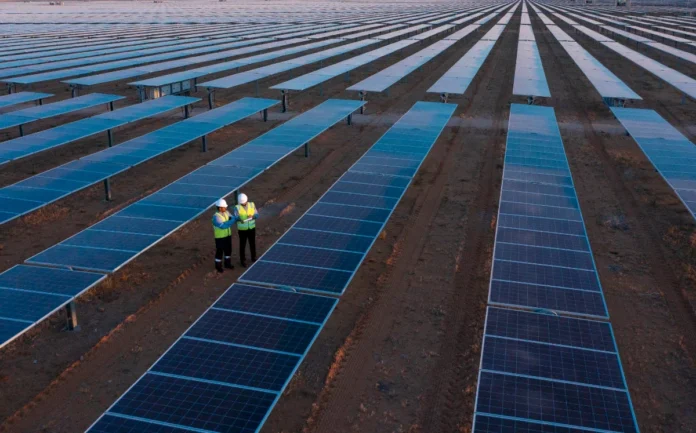
Saudi Renewables are set for significant growth, with the Kingdom targeting 60 gigawatts of capacity by 2031. The International Energy Agency expects Saudi Arabia to expand its renewable electricity capacity fivefold over the next six years. This forecast places the Kingdom at the centre of the region’s expected clean energy expansion.
According to the IEA’s annual renewables report, Saudi Arabia added nine gigawatts of renewable electricity capacity during 2025. That represented a record increase for the country and established a starting point for further expansion. The agency expects capacity to reach 60GW by 2031, reflecting the scale of the planned development.
Moreover, the Kingdom’s projected additions represent approximately half of the renewable capacity growth expected across the Middle East and North Africa. The region as a whole could triple its renewable energy capacity during the same period. Consequently, Saudi Arabia’s plans account for a substantial share of the regional expansion.
The report describes this development as a major structural change in the region’s energy market. It also identifies solar power as the principal source driving the expected growth. Solar energy could account for almost 80 percent of the region’s forecast capacity additions through 2031.
Across the Middle East and North Africa, the IEA projects 122GW of additional renewable electricity capacity by that year. This forecast highlights the importance of solar projects within the region’s changing energy mix. Furthermore, it points to growing renewable generation across several Gulf countries.
The United Arab Emirates also features prominently in the agency’s projections. By 2031, the UAE could become the world’s leading country for solar electricity generation per capita. Meanwhile, Oman and Qatar could both rank among the ten leading nations in this category.
These regional projections illustrate how several Gulf states are expanding their renewable energy ambitions. However, Saudi Arabia’s planned increase represents a particularly large contribution to the overall forecast. Its expected 60GW capacity would account for half of the region’s projected additions.
The Kingdom has also established a longer-term target through its Vision 2030 reform programme. Under that objective, renewable sources should provide 50 percent of the country’s electricity capacity. The target connects renewable energy development with the Kingdom’s broader economic and energy transformation plans.
The Saudi Renewables expansion therefore represents a significant part of the country’s stated energy ambitions. The latest IEA forecast provides an indication of the scale expected by 2031. Nevertheless, the projections describe anticipated growth rather than confirming that the capacity targets have already been achieved.
