
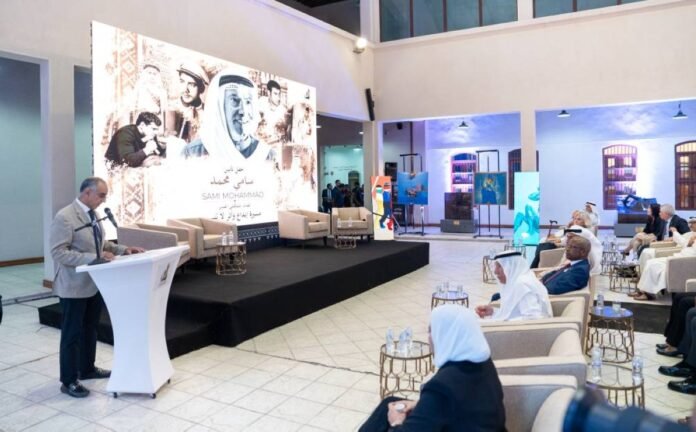
Sami Mohammad’s artistic legacy took centre stage in Kuwait on Wednesday as cultural officials honoured his contributions to sculpture and painting. The National Council for Culture, Arts and Letters (NCCAL) organised a memorial ceremony at the Museum of Modern Art. The event recognised a career spanning more than six decades and celebrated the artist’s influence on Kuwaiti and Arab visual arts.
NCCAL Secretary-General Dr Mohammad Al-Jassar addressed attendees and reflected on the distinctive themes that shaped Mohammad’s work. He explained that the sculptor placed human experiences at the heart of his artistic expression. Through the human body, Mohammad explored suffering, resistance and hope, creating works that reflected the complexity of human life.
Al-Jassar also described the artist’s collection of sculptures and paintings as an important part of Kuwait’s cultural memory. Moreover, he highlighted the recognition Mohammad received at Arab and international events throughout his career. His achievements, the secretary-general said, offer future generations a valuable record of the country’s developing visual arts movement.
Beyond his artistic achievements, Al-Jassar remembered Mohammad for his humility and genuine connections with people. He said the council intended to preserve and document the artist’s work for future generations. Consequently, the memorial also reinforced the importance of safeguarding Kuwait’s cultural heritage and recognising artists who helped shape its identity.
Speaking for the family, Mohammad’s son Bashar Sami expressed gratitude to everyone who attended the tribute. He recalled that his father developed a passion for sculpture during childhood and drew inspiration from Kuwait’s environment and traditions. These influences included the desert, Sadu weaving, Arab heritage and the sea, alongside the everyday struggles of Kuwaitis earning their livelihoods.
According to Bashar, his father used art to communicate experiences that often remained unheard. He viewed creative expression as a human message that could cross geographical boundaries and endure beyond an individual lifetime. Furthermore, the family believes his sculptures and paintings continue to preserve memories of Kuwait’s history, society and cultural traditions.
Bashar also acknowledged the support Kuwait provided for cultural development throughout his father’s career. He explained that his father wanted Dar Maryam to stand in Kuwait as an expression of gratitude to his homeland. The project also reflected a desire to create a lasting home for his artistic legacy.
The memorial programme, presented by Sarah Khalaf, included a documentary exploring the artist’s life and work. In addition, a panel discussion brought together artist Jassim Bu Hamad, Bashar Sami Mohammad and engineer Sabah Al-Rayes. Dr Nasser Al-Refai moderated the discussion, giving participants an opportunity to reflect on the sculptor’s influence.
Through the ceremony, Sami Mohammad’s legacy received renewed attention as an important part of Kuwait’s artistic history. The NCCAL’s commitment to documenting his work aims to keep his creative contributions accessible to future generations. His career demonstrates how sculpture and painting can preserve cultural memory while exploring universal human experiences.
