
Saudi Arabia plans to establish a crude oil storage arrangement in Singapore during the second half of 2027, strengthening its regional energy supply network. The proposed initiative will also support Singapore’s energy security by providing access to additional oil supplies during potential disruptions.
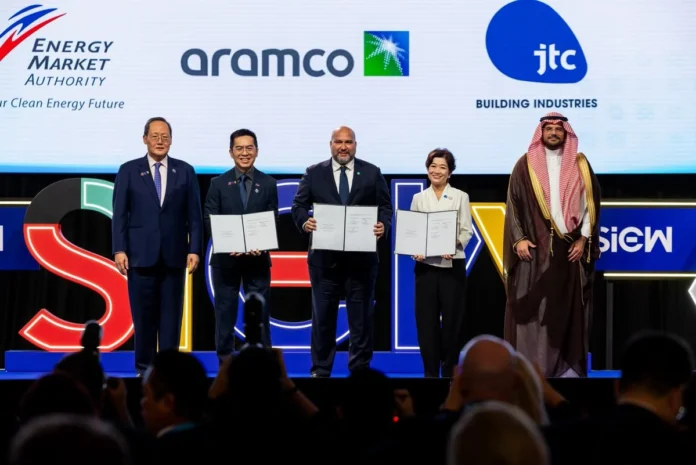
Saudi Aramco, Singapore’s Energy Market Authority and JTC Corporation signed a memorandum of understanding during Singapore International Energy Week. The agreement marks an initial step toward developing the arrangement, although both sides must complete further negotiations before implementation.
Under the proposal, Aramco would store Saudi crude oil at the Jurong Rock Caverns facility on Singapore’s Jurong Island. The underground installation provides substantial storage capacity, allowing Singapore to maintain additional energy reserves when international shipments face interruptions.
Singapore’s Minister for Energy, Trade and Industry, Tan See Leng, said officials expected to conclude negotiations within several months. However, the participating organisations have not yet disclosed the planned storage volume, financial arrangements or the precise terms governing access.
The initiative comes as Asian economies face continued concerns about energy supply reliability and dependence on imported crude oil. Before the conflict involving the United States, Israel and Iran, Asia obtained approximately two-thirds of its oil imports from the Middle East.
Consequently, disruptions affecting shipping through the Strait of Hormuz have heightened concerns among energy importers across the region. Several Asian countries have responded by drawing down inventories and assessing alternative measures to protect their energy supplies.
The proposed Saudi crude storage arrangement could give Singapore an additional resource during future supply interruptions. Nevertheless, the announcement does not establish how much oil Singapore could access or under what conditions authorities could release the reserves.
JTC states that the Jurong Rock Caverns can accommodate up to 1.47 million cubic metres of liquid hydrocarbons. However, this figure represents the facility’s total capacity, and officials have not confirmed the allocation for Saudi Arabia.
The Singapore proposal builds on Saudi Arabia’s existing efforts to maintain strategic crude storage arrangements across Asian markets. In Japan, Aramco and the Japan Organization for Metals and Energy Security renewed a separate agreement covering approximately 8.2 million barrels of crude oil.
That arrangement allows Aramco to use Okinawa as a regional supply hub while providing Japan preferential access during emergencies. The partnership began in 2010 and supports energy distribution to customers across Asian markets.
Meanwhile, Singapore continues developing energy partnerships with Gulf producers beyond Saudi Arabia. Tan said Singapore had renewed cooperation with QatarEnergy on liquefied natural gas and low-carbon technologies.
Singapore also established a joint energy taskforce with Abu Dhabi National Oil Company during the preceding week. Together, these initiatives reflect Singapore’s efforts to diversify energy relationships and strengthen cooperation with major regional suppliers.
Ultimately, the Saudi crude storage proposal remains subject to further negotiations and implementation planning. Its eventual contribution will depend on the final agreement, allocated capacity and procedures governing access during supply emergencies.
