
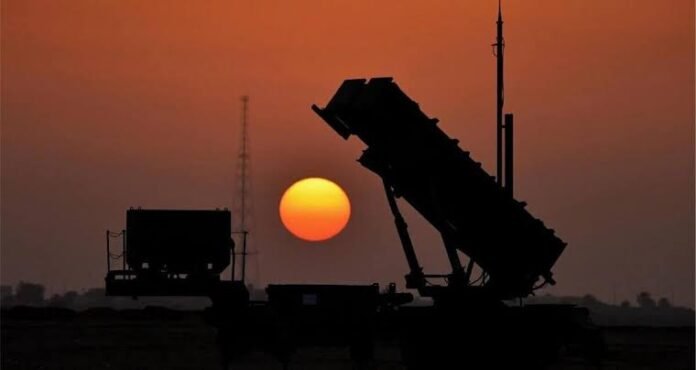
Houthi missile launchers in Sanaa came under attack after Saudi air defenses intercepted a ballistic missile heading toward Riyadh. The Saudi-led coalition in Yemen said it destroyed two launch platforms during operations targeting the Houthi militia’s missile network.
Maj. Gen. Turki Al-Maliki, spokesperson for the Coalition to Restore Legitimacy in Yemen, announced the operation on Monday. He said one destroyed launcher had been used in the attack targeting the Saudi capital.
Al-Maliki added that coalition forces would continue efforts to dismantle the group’s ballistic missile capabilities. Meanwhile, Saudi authorities confirmed that air defenses intercepted and destroyed the missile before it reached Riyadh.
The incident began overnight when residents received an emergency Civil Defense alert on their mobile phones. The warning arrived at approximately 3:42 a.m. local time and advised residents about a potential aerial threat. Minutes later, authorities issued another alert confirming that the immediate danger had passed.
The latest exchange follows a series of missile and drone attacks targeting different parts of Saudi Arabia. Consequently, security concerns have grown as projectiles have threatened cities, residential areas and locations near important religious sites.
On Sunday, Saudi authorities reported injuries after debris from two intercepted ballistic missiles fell near Khamis Mushayt and Ahad Rafidah. A Saudi citizen and an Asian expatriate sustained injuries, according to a Civil Defense spokesperson. The falling debris also damaged three residential buildings and seven vehicles.
Furthermore, missile debris landed at several locations across western Saudi Arabia on Saturday. Authorities reported incidents in Wadi Al-Mughammas, approximately 20 kilometres from the Grand Mosque in Makkah. Other fragments fell in Jeddah’s Al-Nuzha neighbourhood, Wadi Jalil in Taif and the Masturah area of Rabigh. Officials reported no casualties from those incidents.
The coalition also reported intercepting two drones and a ballistic missile aimed at Riyadh on Sunday. In addition, air defenses destroyed a cruise missile targeting Khamis Mushayt and intercepted ten ballistic missiles heading toward southern Saudi Arabia.
Saturday’s attacks reportedly involved ballistic missiles targeting Taif, Yanbu and Riyadh, alongside a drone aimed at the Eastern Region. These repeated incidents have increased pressure on Saudi security forces to protect populated areas and critical infrastructure.
Concerns have also extended to the safety of Islam’s holiest sites. Sheikh Abdulrahman Al-Sudais, president of Religious Affairs at the Grand Mosque and the Prophet’s Mosque, condemned attacks directed toward the Makkah and Madinah regions.
Al-Sudais described the security and sanctity of the Two Holy Mosques as a red line. He also argued that attacks threatening these locations violated religious principles and humanitarian norms.
Meanwhile, Saudi Arabia has continued strengthening its response to incoming missiles and drones. The coalition maintains that its operations aim to prevent further attacks and dismantle the Houthi missile network.
The latest developments also follow a partial reopening of Riyadh’s King Khalid International Airport on Sunday. Authorities began restoring limited services after a deadly October 10 strike reportedly killed 13 people and injured more than 300.
Airport officials said Terminal 1 resumed limited domestic operations, while Terminal 2 handled international flights operated by national carriers. They also advised passengers to confirm their travel arrangements before travelling to the airport.
The destruction of the launchers marks another response to the continuing cross-border attacks. However, the frequency of recent interceptions highlights the ongoing security challenges facing Saudi Arabia as tensions continue across the region.
