
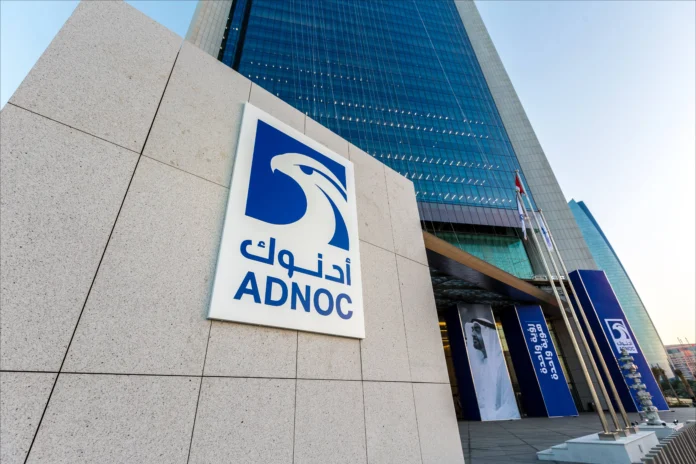
ADNOC has announced changes to its In-Country Value (ICV) programme to simplify supplier registration and improve competition for contracts. The new ICV model will combine commercial pricing with local value contributions, while introducing faster digital processes. The changes aim to support local manufacturers and make procurement more efficient.
Salama Al Awadhi, ADNOC’s senior vice president for commercial affairs, local value and industrial development, announced the reforms at the Make It with ADNOC Forum in Abu Dhabi on October 25. She said registration would become 80 percent faster, while artificial intelligence would help validate submitted documents. Additionally, ADNOC plans to reduce paperwork and remove unnecessary approval steps.
The new methodology will take effect on November 1, replacing the scoring system introduced in 2018. Under the revised approach, commercial considerations will account for 70 percent of the score, while ICV contributions will represent the remaining 30 percent. Previously, suppliers with the highest ICV scores had to match the lowest commercial price to secure contracts.
Al Awadhi said ADNOC needed a simpler and more competitive framework to support its growth plans. The company will apply different requirements according to contract value, allowing smaller suppliers to navigate fewer compliance obligations. Consequently, the changes could make the procurement process more accessible for businesses of different sizes.
Contracts worth less than $2 million will fall outside ICV requirements. Meanwhile, contracts below $50 million will not require ICV retention. For contracts valued between $2 million and $50 million, ADNOC will apply the new 70/30 scoring model.
For contracts ranging from $50 million to $200 million, suppliers must follow the same scoring method and submit an improvement plan covering the contract period. Larger projects exceeding $200 million will receive tailored ICV requirements based on their individual scope. Suppliers handling these major projects must also provide plans to improve their local value contributions.
ADNOC will also expand its Local Plus initiative across all its EBC contracts, building on an announcement made in May. The programme’s approved list now includes more than 100 local manufacturers. This expansion supports the company’s efforts to increase participation by domestic producers in its supply chain.
Alongside the new scoring framework, ADNOC is automating ICV retention and related administrative procedures. Suppliers will upload their ICV certificates through the system, which will calculate their obligations automatically. The platform will then process payments based on those requirements, reducing the need for emails and manual entries.
ADNOC also plans to cut required documentation by 50 percent and exempt 60 percent of its services from pre-qualification requirements. Furthermore, the company will bring registration, due diligence and pre-qualification into one platform. Suppliers will only need to register once instead of navigating several separate systems.
Artificial intelligence will support document validation throughout the process. According to Al Awadhi, the streamlined registration system will allow suppliers to complete registration on the same day. The automated ICV retention service is already operational, she added.
The company has also retired the ICV programme’s previous logo, which dates back to 2018. Al Awadhi said the new visual identity accompanies the broader changes to the programme and its processes.
She explained that ADNOC developed the reforms through discussions with suppliers and manufacturers. Their feedback helped identify existing strengths and areas requiring improvement. Therefore, the company presented the changes as a collaborative effort rather than a decision made internally.
The forum also featured senior representatives from the Ministry of Industry and Advanced Technology and ADNOC’s commercial leadership. Their participation highlighted the programme’s role in local industrial development and supplier engagement.
Overall, ADNOC’s revised ICV framework places greater emphasis on competitive pricing, streamlined compliance and digital efficiency. The new requirements will begin in November, while the company continues expanding opportunities for local manufacturers. The practical impact will depend on how suppliers adapt to the revised scoring and contract-specific obligations.
