
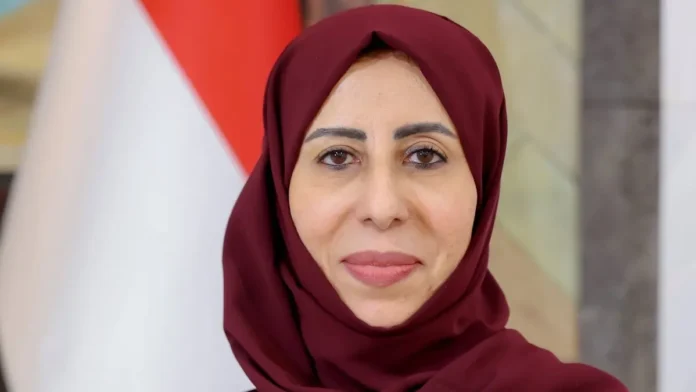
Yemen’s Foreign Minister Afrah Al-Zouba has rejected Iran’s proposed mediation, arguing that its support for the Houthis undermines neutrality. She accused Tehran of contributing to the conflict through military assistance, political backing, and financial support for the group. Her remarks emphasized that a country accused of arming one side cannot credibly mediate between opposing parties.
Al-Zouba outlined her position in a statement published on social media platform X on October 18. She argued that Iran had become involved in the war by providing the Houthis with weapons, training, funding, missiles, and drones. Consequently, she called on Tehran to end its influence in Yemen, respect national sovereignty, and comply with international law.
The minister also accused Iran of prolonging hostilities while publicly presenting itself as a potential mediator. According to her statement, the Houthis have intensified attacks against government facilities and civilian targets in Yemen. She also alleged that the group continues to threaten Saudi Arabia and international maritime navigation.
Al-Zouba specifically cited developments involving Aden, Yemen’s interim capital, and the besieged city of Taiz. She accused the Houthis of targeting government headquarters in Aden and maintaining pressure on Taiz. However, the statement did not independently establish the details of each alleged incident.
The minister argued that Iran’s mediation proposal conflicts with the Houthis’ continued rejection of political initiatives. She maintained that the group has used periods of reduced fighting to reorganize and strengthen its military capabilities. Furthermore, she described Yemen as a strategic bargaining tool within Tehran’s wider regional disputes.
Al-Zouba also rejected suggestions that the Houthis could legitimately represent the Yemeni state. She argued that Iran’s engagement with the group does not grant it authority over Yemen’s national decisions. In her view, the internationally recognized government retains the right to determine the country’s political direction.
The minister further emphasized Yemen’s solidarity with Saudi Arabia and its right to protect its territory and population. She described the security of both countries as closely connected. Additionally, she credited Saudi Arabia with providing economic, humanitarian, and development assistance to Yemen over several years.
Al-Zouba also linked threats against Gulf Cooperation Council countries and Jordan to what she described as Iranian regional interference. She argued that support for armed groups contributes to wider regional insecurity. Nevertheless, these characterizations represent the Yemeni official’s position rather than independently verified conclusions.
Addressing sovereignty concerns, Al-Zouba cited several actions involving Iranian engagement with the Houthis. These included hosting a Houthi representative in Tehran, appointing an Iranian representative to the group in Sanaa, and operating flights to Sanaa without government approval. She described these actions as violations of Yemeni sovereignty and diplomatic rules.
The minister called on the international community to take practical steps against what she characterized as Iranian interference. She urged governments to help Yemen restore state institutions and extend official authority across its territory. Moreover, she called for stronger enforcement of existing United Nations arms restrictions targeting the Houthis.
Al-Zouba also urged international authorities to designate the Houthis as a terrorist organization and cut their funding sources. She called for accountability for those supporting the group and tighter enforcement of relevant arms restrictions. Her statement concluded that meaningful progress toward peace requires stopping weapons supplies that fuel the conflict.
The remarks underscore continuing disagreements over Iran’s regional role and the prospects for resolving Yemen’s conflict. Al-Zouba’s position makes clear that her government rejects mediation efforts from actors it considers directly involved. Any assessment of the allegations and their implications requires further evidence and consideration of responses from the parties concerned.
