
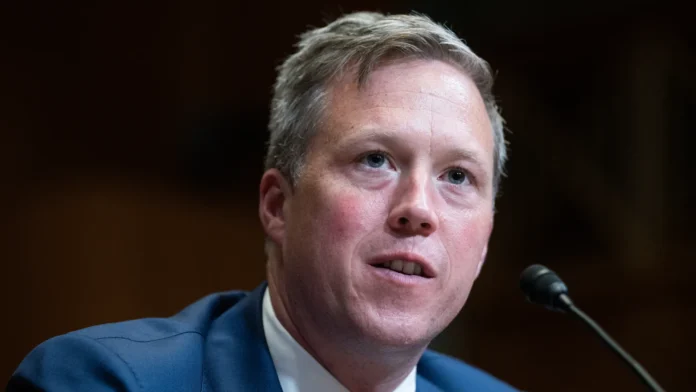
Dan Driscoll Resigns as US Army secretary after 18 months, adding another senior leadership change under President Donald Trump.
The White House announced Driscoll’s departure Monday without providing a specific explanation for his decision. However, his resignation follows months of reported disagreements with Defense Secretary Pete Hegseth over Army priorities.
Before leaving, Driscoll discussed the Army’s condition with Trump, according to an Army official familiar with the matter. He subsequently submitted his resignation, ending a relatively short tenure leading the military service.
White House spokeswoman Anna Kelly praised Driscoll’s record and highlighted several achievements from his time in office. She said he strengthened Army readiness, supported diplomatic efforts involving Russia and Ukraine, and advanced Trump’s defense agenda.
Furthermore, Kelly described the Army as stronger when Driscoll departed than when he initially assumed responsibility. However, she did not address reports describing tensions between Driscoll and Hegseth during recent months.
The resignation comes as Trump’s administration continues reshaping senior leadership throughout the US military establishment. Meanwhile, several prominent Army positions have experienced significant changes since Hegseth became defense secretary.
In April, Hegseth removed General Randy George, the Army’s senior uniformed officer, from his position. Subsequently, General Christopher Donahue stepped down from his command overseeing US forces across Europe and Africa during June.
General Christopher LaNeve subsequently emerged as acting Army chief of staff after rising quickly within the service. His appointment added another layer of transition as the administration reassessed senior military leadership.
The leadership turnover also extended beyond the Army during Trump’s second presidential term. Navy Secretary John Phelan left his position in April, becoming the first military service secretary to depart.
Meanwhile, Driscoll’s resignation followed changes involving a drone modernization initiative that he strongly supported. The program reflected his interest in expanding emerging technologies and adapting Army capabilities for future battlefields.
Under LaNeve, officials ordered a Europe-based Army unit to stop developing its own drones. Instead, the unit returned toward conventional infantry operations, representing a shift in priorities surrounding military technology.
Consequently, the decision could influence broader discussions about autonomous systems, procurement, battlefield innovation, and future defense spending. The Army increasingly faces pressure to balance traditional capabilities with rapidly developing technologies.
Driscoll brought military experience and private-sector technology knowledge to his leadership role at the Pentagon. He served as an Army armor officer between 2007 and 2011 and deployed to Iraq.
Later, he moved into technology investment before receiving Trump’s nomination for Army secretary. The Senate confirmed him in February 2025 by a 66-28 vote.
Driscoll Resigns while Washington continues reviewing military readiness, modernization, leadership structures, and strategic priorities. His departure could therefore affect ongoing decisions concerning Army technology programs and operational planning.
Attention now shifts toward Trump and Hegseth as they consider potential leadership changes within the Army. Their next appointment could significantly influence modernization, readiness, procurement, and military strategy.
Driscoll Resigns at a time when senior defense officials face increasing scrutiny over priorities and organizational direction. The leadership transition will likely remain closely watched across Washington and the wider defense establishment.
