
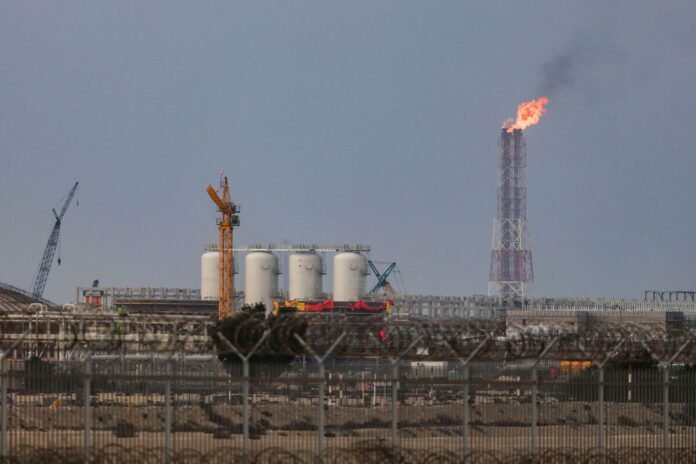
Qatar is preparing to rapidly resume liquefied natural gas (LNG) production once safe navigation through the Strait of Hormuz is restored, with plans to return to most export capacity within two months, according to people familiar with the matter.
State-owned QatarEnergy, which operates the country’s massive Ras Laffan LNG complex, has informed buyers that output could reach around 50% of capacity within one month of reopening shipping routes, rising to roughly 80% within two months.
The remaining production capacity, equivalent to two liquefaction trains, is expected to take years to fully recover after damage caused by earlier missile strikes, the sources said.
QatarEnergy has not publicly commented on the timeline.
The Ras Laffan facility, one of the world’s largest LNG export hubs, was shut in the first week of the conflict after an Iranian attack and has remained largely offline amid ongoing disruptions in the Strait of Hormuz, a critical route for global energy shipments.
Before the shutdown, the plant accounted for nearly one-fifth of global LNG supply, and its prolonged suspension has tightened markets in Europe and Asia.
Despite the disruption, preparations for a restart have reportedly been underway since April. Maintenance work and equipment testing have continued, while some production units have operated at reduced levels to maintain limited regional deliveries.
Energy analysts say a partial recovery within a month would be faster than previously expected, easing pressure on global gas markets once shipments resume.
The development comes as uncertainty continues over maritime security in the Gulf. Shipowners and traders remain cautious as political negotiations over regional tensions continue, including discussions involving the United States and Iran.
Market observers say the return of Qatari LNG exports would help stabilise global supply, although prices remain elevated compared with pre-conflict levels in key markets such as Europe and Asia.
