
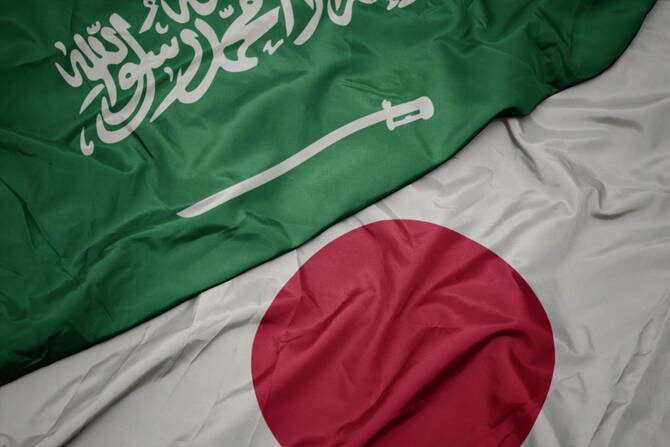
Renewed tensions surrounding the Strait of Hormuz are pushing Saudi Arabia and Japan to deepen strategic cooperation as both countries seek to strengthen energy security and economic resilience in an increasingly volatile global environment.
Analysts say recent disruptions in Gulf shipping routes have once again highlighted the vulnerability of international energy markets and the importance of stable maritime trade corridors.
For Japan, which relies heavily on Gulf crude supplies, the challenge extends beyond securing alternative oil imports. The country’s refining infrastructure has long been tailored to medium and heavy crude grades supplied primarily by Saudi Arabia and other Gulf producers, making rapid diversification difficult.
Saudi Arabia continues to play a central role in Japan’s energy security strategy, not only as a major oil producer but also as a reliable supplier capable of maintaining stability during periods of geopolitical uncertainty.
The Kingdom has also invested heavily in energy resilience infrastructure, including the East-West Pipeline linking the Gulf coast to the Red Sea, helping reduce dependence on the Strait of Hormuz for exports.
However, experts increasingly argue that the Saudi-Japan relationship is evolving beyond traditional energy trade into broader strategic cooperation covering technology, logistics, cybersecurity and clean energy.
Hydrogen and ammonia projects are emerging as key areas of collaboration, combining Saudi Arabia’s investment capacity and renewable energy ambitions with Japan’s technological expertise in fuel cells and industrial applications.
Digital infrastructure, artificial intelligence and data centres are also expected to become major pillars of future cooperation as both countries pursue long-term economic transformation strategies.
Observers say regional instability has reinforced the importance of resilient supply chains, maritime security and coordinated economic planning between strategic partners.
The expanding partnership also aligns with Saudi Arabia’s Vision 2030 agenda and Japan’s growing focus on economic security, with both sides seeking to strengthen cooperation in innovation, infrastructure and next-generation industries.
Officials and analysts believe the evolving relationship could help reinforce regional stability while supporting global energy markets during a period of heightened geopolitical uncertainty.
