
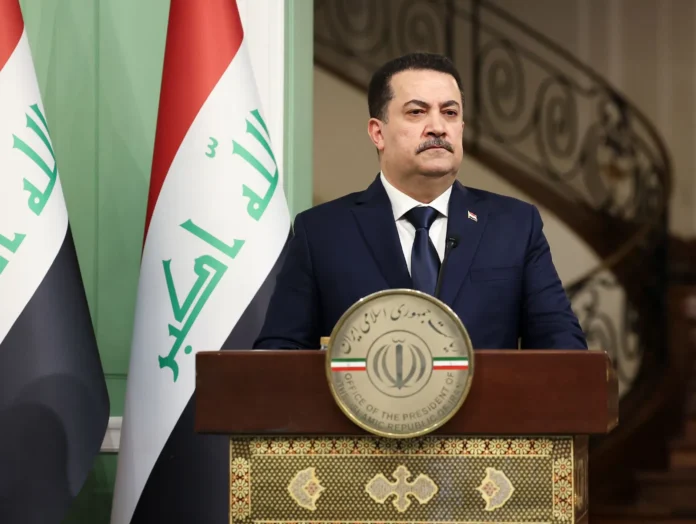
Iraq’s outgoing prime minister has expressed support for the incoming government as the country’s parliament prepares to vote on a new cabinet, in a key step toward completing the latest phase of political transition in Iraq.
In a televised farewell address, Mohammed Shia’ al-Sudani said he backed the formation of the new administration led by prime minister-designate Ali al-Zaidi, as lawmakers ready a confidence vote scheduled for Thursday. His remarks came amid ongoing negotiations between political blocs over ministerial portfolios and the structure of the incoming government.
During his speech, Sudani outlined the circumstances under which his outgoing administration was formed in late 2022, referring to a period of political deadlock. He said the government had worked to maintain stability while navigating regional tensions and domestic economic pressures, and highlighted priorities including anti-corruption efforts, job creation, and public service delivery.
The statement marked a transitional moment in Iraqi politics, as parliamentary factions continue discussions over cabinet appointments before the vote is held. Officials have indicated that the final composition of the cabinet may be submitted separately from the government programme, depending on ongoing political agreements.
Sudani added that he would support the new administration in advancing policies in the public interest, saying stability and continuity were essential as the country moves forward. In his remarks, he said “Outgoing Iraqi PM backs new cabinet” as part of his broader message of institutional cooperation during the handover period.
Lawmakers are expected to debate the ministerial programme before voting on whether to approve the new government. However, political disputes over key ministries have raised the possibility of delays, according to parliamentary sources.
In a second reference to his position, Sudani reiterated “Outgoing Iraqi PM backs new cabinet” while emphasising cooperation with the incoming leadership during the transition.
Political developments in Iraq often carry wider regional implications, particularly for Gulf states, which closely monitor stability in Baghdad due to shared security, energy, and diplomatic interests across the Middle East.
