
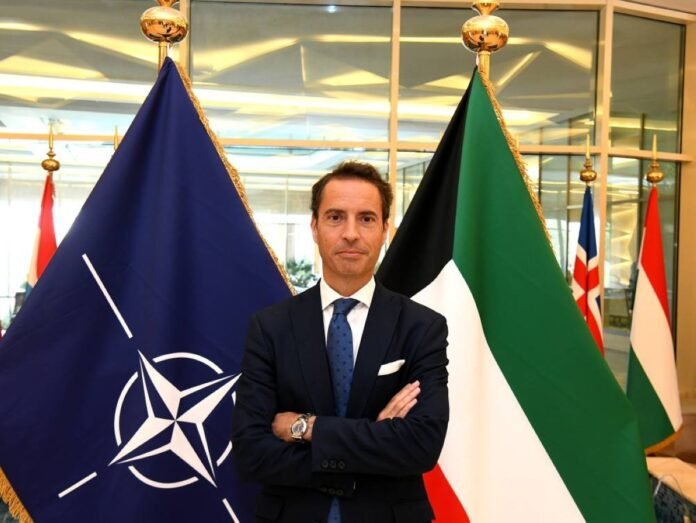
Growing Kuwait NATO cooperation could play a vital role in strengthening regional stability as security challenges evolve. Officials highlighted the importance of deeper coordination between both sides. Moreover, they stressed that expanding joint initiatives can address emerging threats across the region. As a result, Kuwait NATO cooperation continues to gain strategic importance in global security discussions.
In Brussels, Javier Colomina confirmed that multilateral collaboration remains essential. He explained that current regional tensions require stronger coordination mechanisms. Furthermore, he pointed to NATO’s regional center in Kuwait as a key platform. This center supports dialogue, training, and cooperation among partners. Therefore, both sides can use existing tools more effectively to reduce risks and prevent escalation.
Kuwait marked 22 years since the United States designated it as a major non-NATO ally. This status reflects Kuwait’s role in supporting regional and global security. In addition, Kuwait stands among three Gulf countries with this designation. The others include Bahrain and Qatar. Consequently, this recognition strengthens Kuwait’s strategic position within international alliances.
Recent meetings between NATO and Gulf partners focused on expanding practical cooperation. Discussions covered maritime security, countering drones, and protecting infrastructure. They also addressed counterterrorism efforts and crisis response strategies. Moreover, both sides continue regular consultations on regional and global issues. These discussions enhance shared understanding and coordinated action.
Kuwait NATO cooperation also benefits from long-term frameworks like the Istanbul Cooperation Initiative. Kuwait joined this initiative in 2004 as the first Gulf country. Later, it adopted an Individual Partnership Program for 2024–2027. This program focuses on cybersecurity, counterterrorism, and capacity building. Therefore, it strengthens cooperation across multiple sectors.
Since 2017, NATO’s regional center in Kuwait has expanded its role significantly. It has hosted numerous training programs and policy discussions. These activities cover crisis management, disaster response, and defense reform. Additionally, participation from Gulf countries continues to grow. As a result, the center has become a key hub for regional collaboration.
Colomina described Kuwait as a reliable strategic partner for NATO. He emphasized that stronger ties serve mutual interests. Furthermore, he noted that cooperation supports both regional and Euro-Atlantic security. Therefore, continued engagement remains essential for addressing future challenges.
Kuwait NATO cooperation reflects a shared commitment to stability and security. Both sides aim to build on existing partnerships and develop new initiatives. Through coordinated efforts, they seek to strengthen resilience and maintain peace across the region.
