
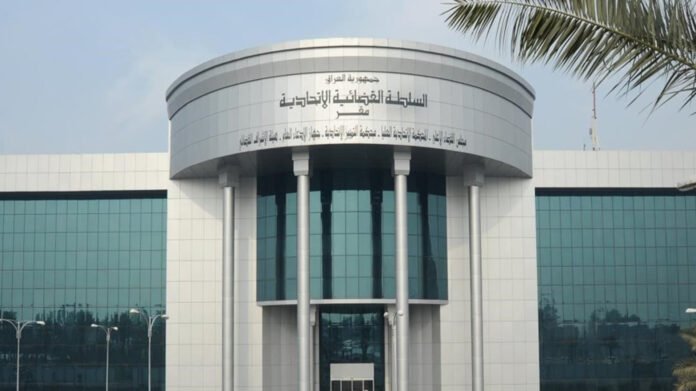
The Iraqi Federal Supreme Court dismissed a legal challenge against Decision No. 957 on Wednesday. This ruling upholds the government’s controversial increase in customs tariffs nationwide. The court rejected the case citing an absence of legitimate interest. Lawmaker Mohammed al-Khafaji confirmed the final ruling to local media. The decision arrives amid widespread economic turmoil and market closures. Merchants and shop owners have staged strikes across multiple Iraqi provinces. This customs tariff crisis now threatens the livelihoods of millions of workers.
Protests first erupted on Feb. 8 in Baghdad and other major cities. Traders lowered their shutters and took to the streets in opposition. The demonstrations quickly spread to Mosul, Kirkuk, and the southern port city of Basra. Commercial activity ground to a halt in these major economic hubs. In Mosul, nearly all city center shops remained closed for business. Witnesses described the scene as highly unusual for the bustling commercial district. The customs tariff crisis has paralyzed trade in ways not seen previously.
The government imposed new duties ranging from five to thirty percent. These tariffs now apply to approximately 16,400 distinct product categories. Economic expert Nabil al-Marsoumi warned about alarming consequences from this policy. He noted the ASYCUDA customs automation system compounded the negative effects. Trade volume with the international community has declined by 50 percent. Customs revenues also dropped by 71 billion dinars in a single month. More than one million traders now face significant financial uncertainty. Additionally, millions of workers across 350,000 enterprises remain at risk.
Traders reported staggering increases in their import-related expenses. Clearing a single shipping container formerly cost around five million dinars. That same process now demands as much as 60 million dinars per container. In Basra, wholesalers faced similar astronomical fee increases at the ports. Customs charges rose from three million dinars to 35 million dinars per container. Consequently, containers remain stalled and inaccessible at Umm Qasr Port. The Iraqi Traders Association has since called for an open-ended nationwide strike. They also demand the immediate release of all goods held at ports.
The Ministry of Finance attempted to mitigate the public backlash recently. Officials reduced the average import valuation within the ASYCUDA system by 25 percent. They described this adjustment as an effort to ease financial strain. Nevertheless, the unrest has only intensified in recent days. Merchants argue that soaring import costs drive up consumer prices significantly. Essential goods are becoming increasingly unaffordable for ordinary Iraqi families. Low-income households face particular hardship amid delayed salaries and reduced allowances. Critics accuse the government of prioritizing austerity measures unwisely. They argue officials should instead target corruption and smuggling networks. Financial mismanagement at border crossings also remains a persistent problem.
Rashid al-Saeedi of the Baghdad Chamber of Commerce issued a stark warning. He stated that protests could escalate if authorities fail to act. The government must reverse the decision to restore market confidence. Economists now urge officials to convene urgent talks with commerce representatives. They seek a balanced solution protecting both state revenues and market stability. Observers emphasize that swift policy adjustments are essential now. Without meaningful dialogue, continued closures will deepen Iraq’s economic fragility. The customs tariff crisis threatens to widen the gap between state and citizens.
