
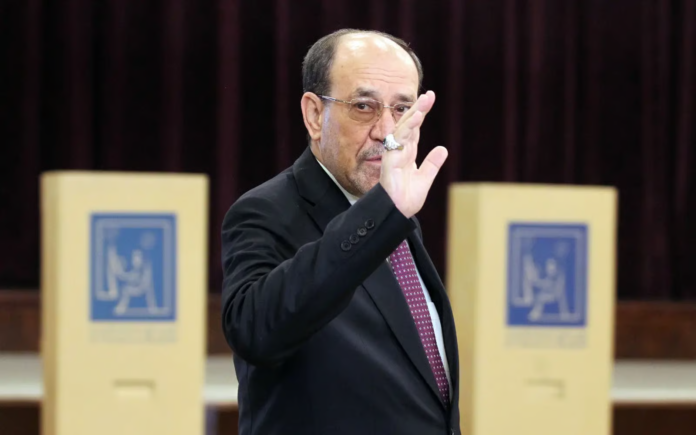
A powerful Iraqi political alliance reaffirmed its support Saturday. This Iraqi bloc backs former Prime Minister Nouri al-Maliki. They want him to lead the country’s next government. Their decision directly defies a stark American warning. President Donald Trump recently threatened to withdraw U.S. support. He specifically opposed Maliki’s potential return to power.
Therefore, the Coordination Framework made this decisive statement. This group represents a Shi’ite political alliance. It currently holds a parliamentary majority in Iraq. The bloc formally selected Maliki as its nominee. This follows a recent parliamentary election in the country. Maliki served as Iraq’s first elected prime minister. He took power after the 2003 U.S.-led invasion.
The alliance firmly called the prime minister selection an internal matter. They stated the choice is a purely Iraqi constitutional process. The bloc insists it must proceed without any foreign interference. Furthermore, they also seek balanced relations with international partners. These relationships must operate on mutual respect. This statement clearly references American pressure.
President Trump issued his strong warning recently. He said Washington would stop helping Iraq entirely. Moreover, this would happen if Maliki returned to a leadership role. Trump’s threat represents a significant escalation. However, it highlights his campaign to curb Iranian influence. Iran-linked groups hold substantial power within Iraq.
Iraq has long navigated a difficult diplomatic tightrope. The country maintains relations with both Washington and Tehran. Moreover, these two powers are Iraq’s closest allies regionally. Therefore, the Coordination Framework’s defiance now tests this balance. It creates a major diplomatic challenge for all sides.
Maliki previously held the prime minister role for eight years. His leadership spanned from 2006 until 2014. Therefore, his tenure remains a deeply divisive period within Iraq. Many critics blame his sectarian policies for internal conflict. These policies arguably enabled the rise of extremist groups.
The current political standoff carries serious implications. It risks destabilizing Iraq’s fragile governmental process. In addition, it also threatens the strategic U.S. relationship with Baghdad. American military and economic support remains crucial. Therefore, the defiant Iraqi bloc backs its choice despite these high stakes. International observers now watch the situation closely. The coming days will likely determine Iraq’s political future.
