
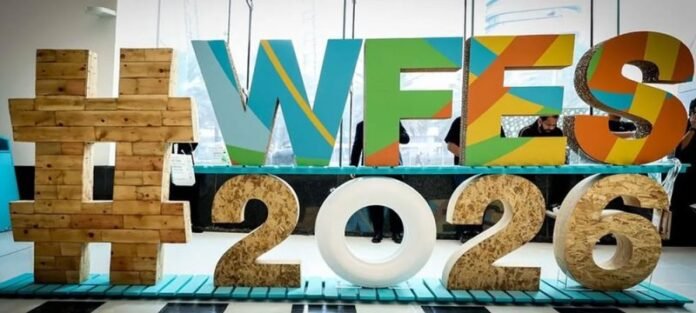
The World Future Energy Summit in Abu Dhabi opened with strong momentum and global attention. From the start, the event highlighted investment, cooperation, and long-term energy strategies. Moreover, the summit formed a central pillar of Abu Dhabi Sustainability Week. Masdar hosted the event at the Abu Dhabi National Exhibition Centre. As a result, policymakers, investors, and energy leaders gathered in large numbers. Throughout the first day, speakers emphasized clean energy adoption and international cooperation. In addition, several multi-billion-dollar agreements surfaced during early sessions. Consequently, the summit quickly emerged as a focal point for business-driven energy dialogue.
To begin with, a senior European energy official outlined Europe’s hydrogen ambitions. She stressed hydrogen as a core pillar of the European energy transition. Furthermore, she highlighted Europe’s legal framework supporting low-carbon hydrogen production. Accordingly, this framework opens major opportunities for Gulf economies. Meanwhile, she explained that the Connecting Europe financing program will expand significantly. Specifically, funding may rise fivefold to reach €30 billion. At the same time, negotiations with GCC countries continue to progress. Therefore, cooperation between Europe and the Gulf appears increasingly strategic.
She also noted that stable trade frameworks encourage private sector confidence. Consequently, investors gain stronger incentives to fund energy supply chains. In turn, innovation, affordability, and competitiveness improve across markets. Separately, the EU delegation to the UAE shared updated investment figures. She revealed that the UAE remains Europe’s leading investment partner in the region. Bilateral investments now approach €328 billion. Additionally, future trade agreements could further strengthen clean energy cooperation, particularly in hydrogen and renewable technologies.
Likewise, Masdar’s green hydrogen leadership outlined ambitious investment projections. He explained that mutual EU-UAE investments could reach trillions of dollars over time. Notably, international banks expect global hydrogen investment to exceed $11 trillion by 2040. Thus, long-term capital commitments already appear inevitable. During sustainability discussions, speakers shifted focus toward urban mobility. For example, recent research showed that one-third of UAE residents rely on public transport. Therefore, experts called for integrated mobility systems to improve access and reduce emissions.
Environmental discussions also stressed biodiversity and climate resilience. For instance, speakers highlighted the importance of green corridors and mangrove restoration. Accordingly, regional climate solutions must reflect Gulf environmental conditions. Rather than copying global models, participants urged locally tailored approaches. Meanwhile, international partnerships dominated several panels. Notably, energy leaders discussed a proposed UAE-Australia economic partnership. They described the agreement as transformative for renewable investment flows, despite pending ratification.
Finally, Abu Dhabi energy officials highlighted lessons from large-scale solar projects. They emphasized integrated systems over single-technology solutions. Solar energy, they argued, now functions as core infrastructure. Projects such as Noor Abu Dhabi and Al Dhafra demonstrate this transition clearly. Ultimately, the World Future Energy Summit in Abu Dhabi reinforced the emirate’s expanding global role. Through investment, collaboration, and innovation, Abu Dhabi continues shaping the future of clean energy markets.
