
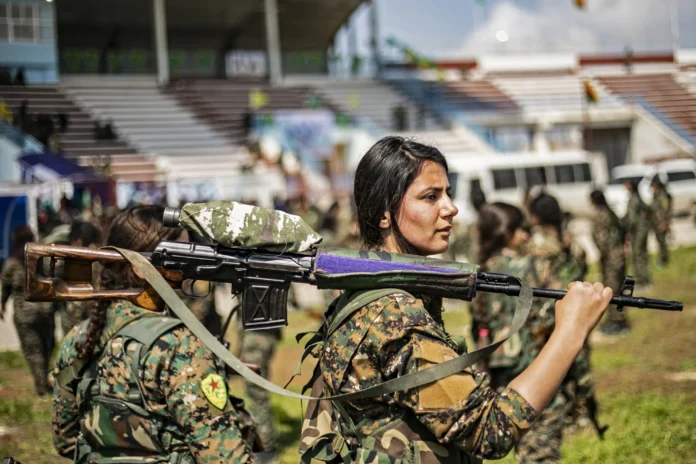
The Kurdistan Region is focusing on women’s rights in Kurdistan after a cleric made controversial statements. A video showed Damascus-affiliated factions throwing a female Asayish fighter’s body from a building during Aleppo clashes. Following this, cleric Mazhar Khorasani said women should stay home and serve men. His remarks sparked public criticism and prompted legal action by the Independent Human Rights Commission of the Kurdistan Region (IHRCKR).
The IHRCKR filed a lawsuit against Khorasani. Officials said his comments disrespected women and undermined their societal role. They also noted the statements contradict both religious principles and the Iraqi Constitution. Article 14 guarantees equality for all citizens and bans discrimination based on gender, race, ethnicity, or religion. Through this case, authorities aim to strengthen women’s rights in Kurdistan and hold public figures accountable.
Sleman Sindi, IHRCKR media director, said Khorasani portrayed women as “servants meant only for domestic work.” The commission urged the Ministry of Endowments and Religious Affairs to act against anyone disrespecting others under religion. Furthermore, the legal action shows the region’s commitment to protecting women’s rights in Kurdistan. Authorities also want public discourse to follow ethical and legal standards.
Khorasani responded to the backlash by apologizing for any offense. He claimed his comments were misinterpreted and said he supports Kurdish families affected by Aleppo violence. He stressed respect for female fighters’ sacrifices and offered condolences to the slain fighter’s family. Despite his explanation, the IHRCKR continues to pursue legal action, stating the remarks violated fundamental rights.
The controversy followed clashes in Aleppo’s Kurdish neighborhoods. Syrian government-affiliated forces seized areas from Kurdish Asayish units, causing at least 82 deaths and mass displacement. Social media showed arrests, verbal abuse, and missing civilians. Amid these tensions, the Kurdistan Region emphasized accountability, legal enforcement, and protection of women’s rights in Kurdistan.
Overall, the case highlights the region’s dedication to gender equality. Authorities sent a clear message: public figures must respect the law. Women’s rights in Kurdistan remain a priority for law and society.
