
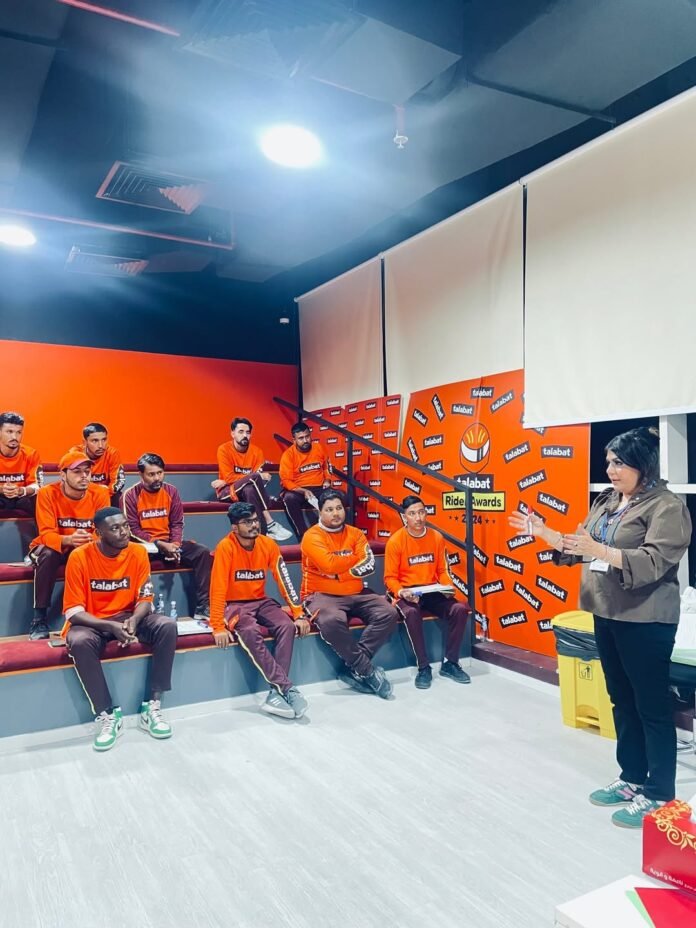
Rider skills development in Qatar continues to gain momentum through a focused professional training initiative. Talabat partnered with British Council Qatar to strengthen communication abilities and essential soft skills. Moreover, this collaboration highlights shared efforts to improve daily work experiences. Importantly, rider skills development in Qatar remains central to long-term workforce empowerment.
The program took place at talabat’s headquarters in Qatar over four interactive sessions. During these workshops, more than 150 riders gained practical English communication tools. Additionally, trainers built lessons around real delivery situations. As a result, riders practiced language skills directly linked to daily tasks.
Furthermore, each session emphasized confidence during busy and high-pressure moments. Trainers guided riders on calm responses and clear communication. Consequently, participants learned how to manage unexpected customer interactions. Therefore, riders reported increased readiness during peak delivery hours.
In addition, the training adopted a hands-on and accessible learning approach. British Council trainers adapted content to real-life delivery environments. This method ensured that learning remained relevant and practical. Hence, riders could immediately apply new skills during shifts.
Talabat leadership emphasized continuous investment in people. The company views rider growth as essential to safety and service quality. Accordingly, professional development remains a strategic priority. Moreover, such initiatives strengthen trust between riders and customers.
Meanwhile, British Council Qatar highlighted the role of education in social progress. The organization stressed the importance of literacy and communication skills. Through practical training, individuals gain tools for confidence and growth. Therefore, community engagement improves through clearer daily interactions.
Trainers facilitating the sessions praised rider engagement and motivation. They highlighted strong participation and openness to learning. Additionally, trainers expressed confidence in the program’s long-term impact. Improved communication supports safer and more positive work environments.
Rider skills development in Qatar also aligns with broader workforce wellbeing goals. Both organizations aim to enhance job satisfaction and safety. Consequently, the initiative supports a stronger and more resilient delivery sector. It also reflects a commitment to inclusive professional growth.
Looking ahead, talabat and British Council Qatar plan to expand similar programs. They aim to reach more riders across Qatar. As a result, access to practical education will increase. Ultimately, this collaboration sets a strong example for workforce development partnerships.
By focusing on communication, confidence, and real-world skills, the initiative delivers lasting value. It demonstrates the power of effective partnerships. Most importantly, it empowers riders to perform with confidence and professionalism every day.
