
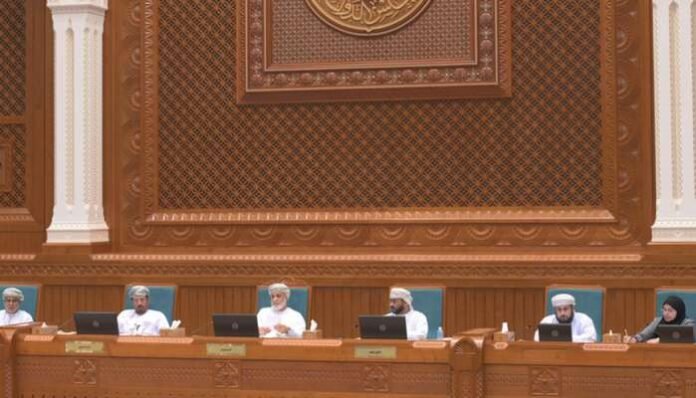
Oman continued strengthening national progress on Tuesday as the State Council discussed the Draft Law on Combating Cybercrimes. The discussion marked a major step toward strengthening national progress during the Council’s third meeting of its third ordinary sitting. The session also supported strengthening national progress by reviewing several national files that shape future policy.
The meeting took place during the Council’s eighth term. Sheikh Abdulmalik bin Abdullah Al Khalili led the session. The Council noted the value of its recent meeting with the Council of Ministers. Moreover, members said that both sides want stronger cooperation. They also stressed that improved coordination can speed up national plans and support long-term development.
During the session, the Council studied the Draft Law on Combating Cybercrimes. Dr. Hamad bin Salim Al Rawahi said that cyber threats change very fast. Therefore, he explained that the law must stay updated. He also noted that the legislation aims to protect digital systems, national data, and key infrastructure.
The Council then reviewed the Social and Cultural Committee’s opinion on amendments to the Cultural Heritage Law. Dr. Mohammed bin Said Al Hajri stated that the changes give authorities stronger tools to protect heritage sites. Additionally, he said that the amendments introduce clearer registration rules. They also create better oversight systems that align with global standards.
Furthermore, the Council discussed a study on diversifying income sources in Oman. Sheikh Dr. Hilal bin Ali Al Hinai presented the study’s main goals. He explained that the study aims to reduce financial pressure and limit waste. It also identifies weaknesses that slow progress. Moreover, it offers solutions that can support stable public finances during the Eleventh Five-Year Plan.
The session ended with a clear message. The Council will continue reviewing legislation that improves governance. It also aims to support development and strengthen the country’s long-term stability.
