
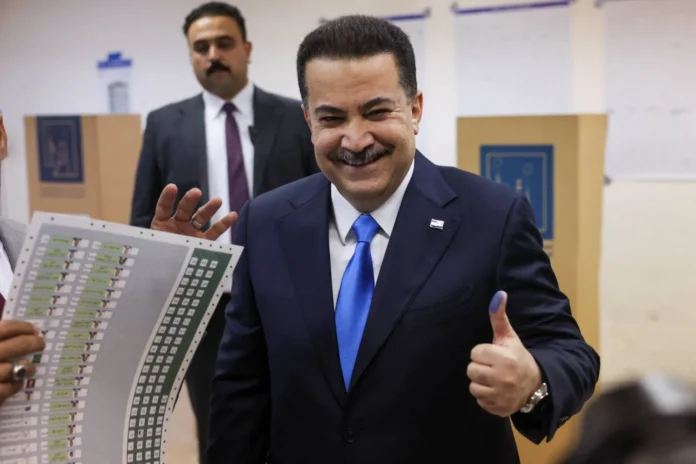
Iraqis headed to the polls on Tuesday to cast their votes in the latest Iraq parliamentary elections, but many citizens expressed frustration and doubt about the possibility of real reform. Despite high hopes among new candidates, most voters remained skeptical that the results would bring meaningful change.
Prime Minister Mohammed Shia al-Sudani sought a second term, yet turnout told a different story. Only about 23% of registered voters had cast ballots by midday, according to the state election commission. Polling stations closed at 6 p.m. local time, marking one of the lowest turnouts since 2003.
Many voters viewed the Iraq parliamentary elections as another opportunity for established political parties to divide power and control the country’s oil wealth. Years of corruption, poor public services, and unemployment have left millions feeling alienated from the political process. Young voters, in particular, voiced their disappointment in a system they see as stagnant and self-serving.
Meanwhile, the absence of populist Shi’ite cleric Moqtada al-Sadr and his supporters further weakened enthusiasm for the vote. His boycott, combined with public discontent, is expected to drive overall turnout below 2021’s record low of 41%. Analysts warn that declining participation could deepen public mistrust and strengthen old political elites.
This year’s election also saw an influx of young candidates hoping to challenge Iraq’s traditional political structure. However, their chances remained uncertain against the dominance of well-funded parties and patronage networks. Former prime minister Haider al-Abadi noted last month that elections depend more on financial influence than popularity.
Many Iraqis echoed that concern. “I will not vote for corrupt leaders again,” said one voter from Basra, reflecting a sentiment shared by countless citizens across the country. For many, the election felt less like an opportunity for change and more like a repeat of old patterns.
Political analysts said that the Iraq parliamentary elections are unlikely to reshape the political map. The next government must still balance U.S. and Iranian influence while addressing pressure to rein in armed militias. As Iraq continues to navigate internal and external challenges, voters remain hopeful yet wary of promises made before.
Through these elections, Iraq once again stands at a crossroads — between persistence and transformation, frustration and renewed hope.
