
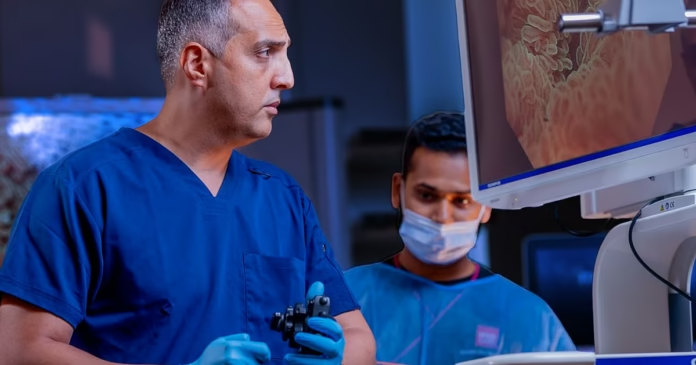
King Abdullah Medical City has successfully removed small secondary cancerous lung lesions through Endoscopic Surgery, avoiding the need for open procedures. The medical team used CT-guided technology to locate the lesions, which measured less than 10 millimetres.
The facility, part of the Makkah Health Cluster, carried out the procedures after controlling the patients’ primary cancerous tumours. However, the secondary lesions presented a particular challenge because their small size made them difficult to locate during surgery.
To address this difficulty, specialists used computed tomography (CT) scans to identify each lesion’s precise location. They then guided a thin medical wire towards the targeted area, helping surgeons locate the tissue requiring removal.
This preparation allowed the surgical team to reach and remove the lesions through small incisions. Consequently, patients avoided the need for conventional open surgery during the procedures.
The operation also demonstrated the importance of coordination between different medical specialties. Teams from Thoracic Surgery and Interventional Radiology worked together, while specialised anaesthesia staff supported the procedures.
Moreover, locating the lesions before surgery helped the team reduce operating time. It also lowered the possibility of converting the minimally invasive procedure into open surgery.
The medical centre confirmed that the patients left the hospital the day after their operations. Their early discharge followed the successful completion of the procedures.
The achievement highlights the role of advanced imaging in supporting complex surgical interventions. In particular, CT-guided wire placement helped doctors identify very small lesions before beginning their removal.
Through this approach, Endoscopic Surgery offered a less invasive option for removing the secondary lung cancerous foci. The procedures also demonstrated how collaboration between specialised departments can support precise surgical treatment.
King Abdullah Medical City described the outcome as a successful example of its teams using specialised technology and coordinated expertise. The announcement did not provide further details about the patients or their subsequent treatment plans.
