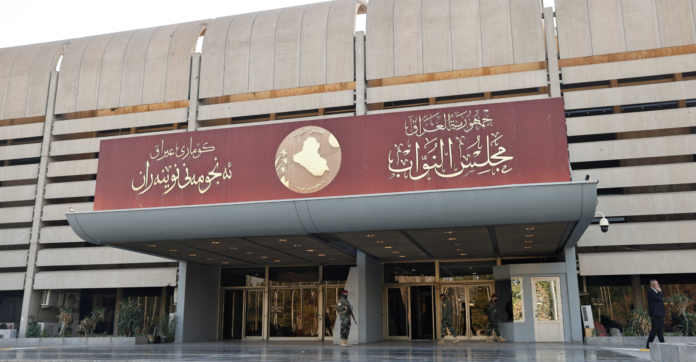
Iraq parliament has passed only three laws since its current term began in late December 2025, raising concerns about legislative delays. Politicians and analysts point to party rivalries, disputes over committee posts and a federal budget that has yet to arrive. They warn that continued deadlock could weaken parliament’s lawmaking and oversight work.
Legislative output has fallen across successive parliamentary terms. Lawmakers approved 216 laws from 2010 to 2014, followed by 164 between 2014 and 2018. The fourth term passed 91 laws before ending early in 2021, while the fifth term approved 69 before concluding in 2025.
Lawmakers say disagreement over contentious proposals has slowed decisions, even when committees have prepared bills for votes. Parliament also extended its session while awaiting the federal budget from the Cabinet. Ahmed Dagher, a lawmaker, said the delays could affect legislation tied to citizens’ rights, public services and economic opportunities.
Political analyst Mujashaa Al-Tamimi linked the impasse to Iraq’s consensus-based power-sharing arrangements. He said agreements among parties in the State Administration Coalition have become a practical condition for passing major laws and conducting oversight. In his view, this limits lawmakers’ independence and makes progress depend on negotiations among coalition partners.
Al-Tamimi contrasted this arrangement with systems where a governing majority advances policies while an opposition scrutinizes decisions. He cited delays to the federal budget, an oil and gas law, and legislation governing the Federal Supreme Court. Without changes to the political process, he warned, parliament could lose ground in both lawmaking and accountability.
Meanwhile, Khalid Sido, a lawmaker representing the Yazidi community, said competition over ministries and committee leadership obstructs bills. Several proposals have received initial readings but still await final votes. They include measures on cybercrime, international crimes, traffic rules, public service and pensions.
Sido highlighted the cybercrime proposal’s provisions on blackmail and hate speech. He also said international crimes legislation could help authorities hold suspects accused of terrorist offenses accountable. Parliament completed readings of both bills, but neither had won final approval by September 2026.
The budget delay has also affected compensation and other entitlements for Yazidis, Sido said. Although parliament has not declared an official legislative recess, he described its inactivity as similar. He expected lawmakers to return in the next session, within roughly one to one-and-a-half months.
Another lawmaker, Mukhtar Al-Mousawi, criticized parliamentary leadership and what he called limited government attention to the legislature. He also argued that party pressure shapes some lawmakers’ votes. Al-Mousawi urged discussion of a presidential system, which would let citizens elect the president directly.
The stalled work leaves major bills awaiting action and raises questions about parliament’s ability to meet public needs. For now, Iraq parliament faces pressure to resolve political disagreements and resume legislative business.