
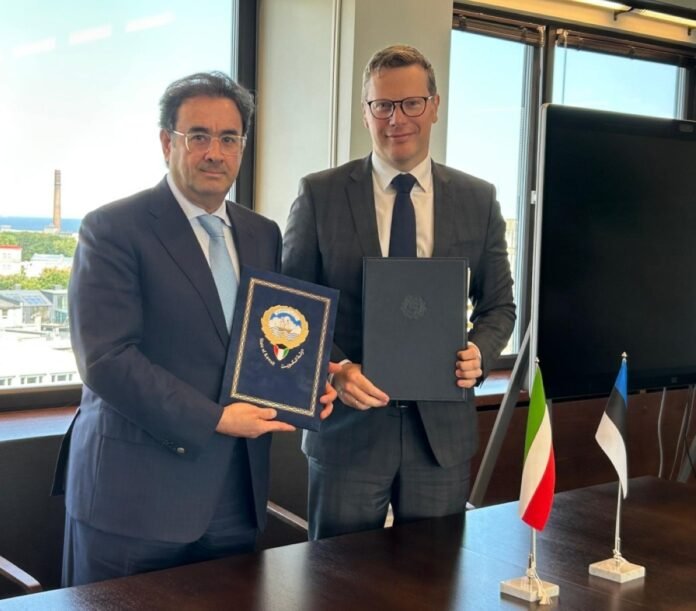
Kuwait and Estonia have taken a major step forward by launching political consultations to deepen bilateral relations. Consequently, the agreement, signed in Tallinn, aims to create a structured dialogue that benefits both countries across several sectors.
On Friday, Kuwait’s Assistant Foreign Minister for European Affairs and Estonia’s Undersecretary for Political Affairs signed a memorandum of understanding (MoU). Specifically, this MoU sets the foundation for political consultations and outlines plans for cooperation in digital transformation, cybersecurity, and investment.
Immediately after the signing, both nations held their first round of consultations. These talks focused on strengthening ties in technology, governance, and digital innovation. Moreover, officials explored ways to increase economic and investment cooperation.
At the same time, Kuwait emphasized its interest in aligning this partnership with its Vision 2035 goals. That strategy places a strong focus on modern governance and technological advancement. As part of the talks, the two countries discussed regional developments and how to collaborate in multilateral settings.
Meanwhile, Estonia’s interest in Gulf nations like Kuwait comes at a strategic moment. In October 2024, Estonia launched a five-year Foreign Direct Investment (FDI) strategy. This plan aims to attract €2.8 billion by 2030. Importantly, it targets high-growth sectors such as digital technology, renewable energy, and health tech.
Furthermore, Estonia’s strategy highlights the Gulf Cooperation Council (GCC) region as a promising investment source. It stresses the need for stronger marketing and customized engagement to build trust among GCC investors. Therefore, Estonia hopes to leverage its strengths in digital governance and its strong startup ecosystem.
Additionally, Kuwait’s ambassador to Germany and non-resident envoy to Estonia also attended the consultations. She expressed strong optimism about future cooperation in education, technology, and innovation.
Overall, these political consultations mark a new chapter in Kuwait-Estonia relations. The focus on tech and innovation reflects shared priorities and a forward-looking agenda. Both sides aim to turn this partnership into real progress for their people.
In conclusion, through structured dialogue, continuous cooperation, and mutual respect, political consultations are expected to deliver long-term benefits for both countries.
