
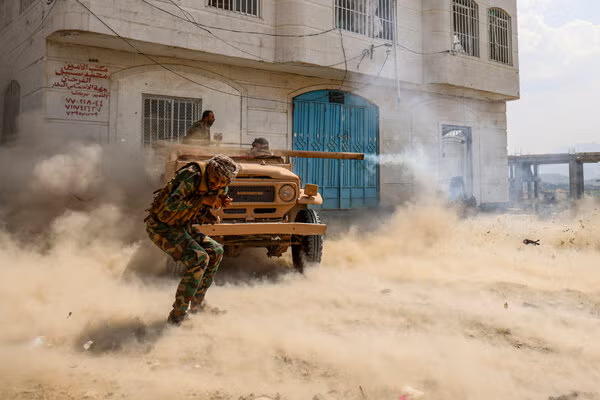
Aden redeployment is shifting pro-government troops from the Bab al-Mandab area toward Yemen’s interim capital, following weeks of intensified fighting.
The Southern Armed Forces said Sunday that it was moving troops to reinforce Aden and neighbouring areas. The force, which supports Yemen’s internationally recognised government, described securing the capital as a priority. It also said the move would strengthen front lines and address security threats.
The withdrawal includes positions around Dhubab Airport and the Bab al-Mandab area. Those locations overlook a strategic waterway at the southern entrance to the Red Sea. Houthi-run media reported that the movement had taken control of the territory after the troops left.
The redeployment follows a weeks-long campaign to secure ground near the shipping route. In early October, pro-government forces said they had secured the strait. However, Houthi forces had earlier claimed control of areas that included Perim Island and the port city of Mokha.
The Houthis say they do not threaten international shipping passing through the waterway. At the same time, they have said they will continue targeting vessels from Saudi Arabia. The latest territorial changes have heightened concern around a route important to global trade and energy shipments.
The article reports that Saudi Arabia had relied on Red Sea exports after the Strait of Hormuz effectively closed during the US-Israel war with Iran. The seizure near Bab al-Mandab contributed to a rise in global oil prices, according to the report.
Meanwhile, United Nations officials have urged all sides to protect civilians and civilian infrastructure. UN human rights spokesperson Ravina Shamdasani said women and children accounted for more than 60% of documented civilian casualties since fighting escalated in August.
The Houthis have also carried out repeated attacks on Aden in recent weeks. One assault on 15 October targeted the presidential palace, killing five people and injuring 16. Saudi Arabia responded with hundreds of air strikes, while Houthi forces launched drones and missiles at Saudi cities and infrastructure.
As fighting has expanded, the United Nations estimates that nearly 330,000 people have been displaced in Yemen. Reports also describe hundreds of deaths, although the supplied account does not provide a confirmed total.
The Aden redeployment comes amid a conflict that began in 2014, when Houthi forces took Sanaa from the government. A Saudi-led coalition intervened the following year to support the government. An informal ceasefire lasting four years began to unravel in July, after Houthi leaders announced a maritime embargo against Saudi Arabia and launched attacks on airports, oil facilities, and tankers.
Houthi officials said those actions responded to a Saudi blockade of ports and airports in their territory, along with an air strike on Sanaa airport. With Aden now receiving additional troops, the Aden redeployment signals a shift in the government-aligned forces’ immediate priorities.
