
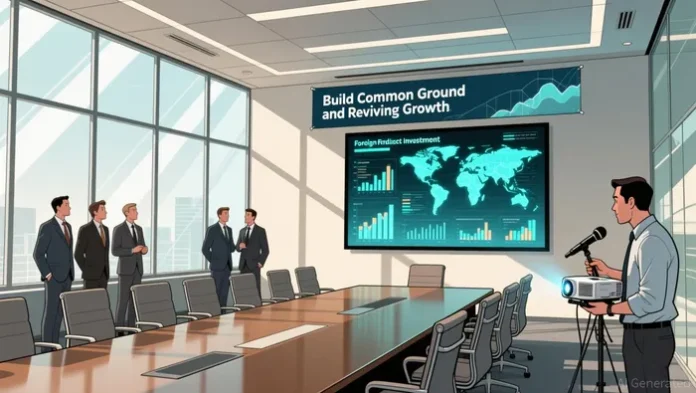
The Saudi WEF postponement has affected one of the most anticipated global economic meetings in Jeddah. Moreover, the decision reflects growing disruption across international events linked to regional instability. The Saudi WEF postponement involves the delay of the World Economic Forum’s Global Collaboration and Growth Meeting. In addition, officials confirmed that no new date has been announced yet.
Saudi state media reported the decision following coordination between the World Economic Forum and the Ministry of Economy and Planning. Furthermore, both sides linked the postponement to current regional developments. The event originally planned for April 22–23 in Jeddah now remains on hold. Consequently, organizers paused preparations for the large-scale international gathering.
The meeting aimed to bring together more than 1,000 global leaders. These participants included representatives from government, business, and civil society. Moreover, discussions planned to focus on global trade, technological transformation, and sustainable growth. However, the Saudi WEF postponement interrupted these preparations at an advanced stage.
In an official statement, the Ministry of Economy and Planning confirmed the delay. It explained that regional conditions required rescheduling for safety and stability reasons. Additionally, the ministry emphasized that the Kingdom remains committed to hosting the event in the future. Therefore, officials continue working with international partners for a revised timeline.
Meanwhile, broader regional tensions continue to disrupt major conferences and events. Since the escalation of conflict in late February, several international gatherings have faced cancellation or delay. Furthermore, rising security concerns have influenced travel and logistics planning across the Gulf region.
Organizers also pointed to operational challenges affecting attendance. These include disrupted air travel routes and higher insurance costs. In addition, uncertainty around security conditions reduced participation from global executives. As a result, the Saudi WEF postponement reflects wider challenges facing international event planning.
Moreover, similar disruptions have affected major sports and technology events across the region. Several Formula 1 races and economic conferences have already been canceled or rescheduled. Consequently, Gulf states continue adjusting their event calendars to match evolving conditions.
Officials reiterated their commitment to future international collaboration. They stressed that the postponed meeting will proceed once conditions stabilize. Overall, the Saudi WEF postponement highlights how regional developments continue shaping global economic engagement and diplomatic activity.
