
The Arabian Peninsula experiences mostly mild earthquakes, a phenomenon explained by the region’s Arabian Plate stability. Researchers say the tectonic plate’s geological properties reduce internal stress and strain.
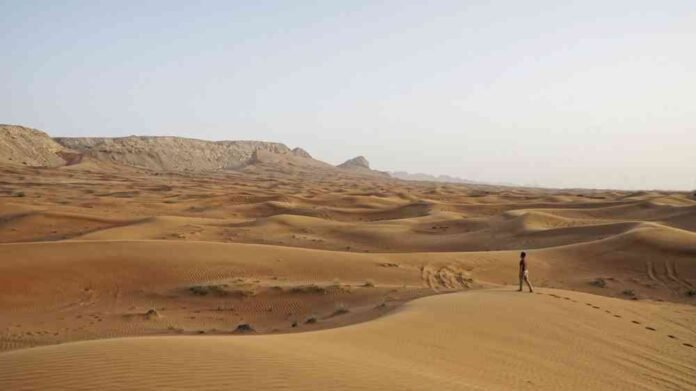
Earthquakes in countries like the UAE, Saudi Arabia, Oman, and Qatar tend to be weaker compared to other tectonically active regions. The stable craton structure of the Arabian Plate covers most of the peninsula, providing natural protection.
Geologists examined almost 3,000 earthquakes from 1941 to 2019, noting magnitudes between 1.0 and 6.2. Most quakes occur near the plate’s edges, such as the Zagros Belt in the northeast and the Red Sea Rift in the west. Interior regions remain relatively calm.
Shallow-depth earthquakes dominate the Arabian Peninsula. They are often felt but rarely cause significant damage. Thick crustal rocks and low heat flow contribute to the low seismicity, reinforcing the Arabian Plate stability of the region.
Different terranes within the Arabian Plate show varying stress levels. For example, Midyan may experience quakes up to magnitude 6.0, while Asir could reach 7.7. The Najd fault system remains the most likely site for stronger tremors.
Scientists are now using advanced artificial intelligence to improve earthquake prediction across the Arabian Peninsula. By analyzing 22 years of US Geological Survey data, satellite imagery, and elevation maps, AI can assess seismic risks more accurately.
The hybrid model combines Inception v3-ensemble extreme gradient boosting (XGBoost) and Shapely additive explanations (SHAP). It reached 87.9% accuracy, learning patterns from past quakes and identifying areas with higher seismic risks. This technology further confirms the importance of Arabian Plate stability while highlighting zones that may experience stronger events.
Experts note that understanding the Arabian Plate’s geological features helps residents and authorities prepare for potential tremors. Early-warning systems and AI models can guide building codes, emergency planning, and risk awareness.
Overall, while the Arabian Peninsula avoids the severe quakes seen in other parts of the world, scientific monitoring remains crucial. Combining geological knowledge with AI technology ensures the safety of populations across the region.
