
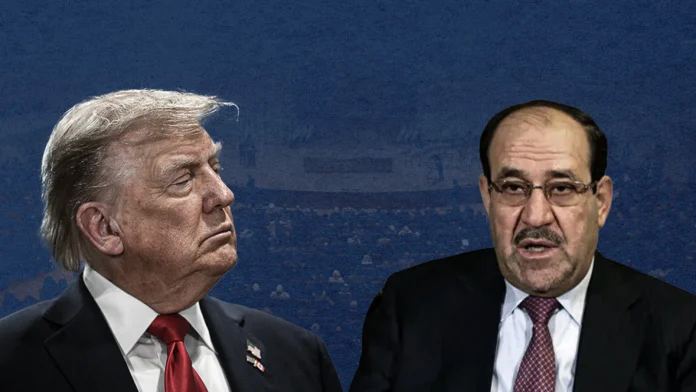
Washington intensified its warnings toward Baghdad as political uncertainty deepened, highlighting US pressure on Iraq at a critical moment. Officials signaled that future cooperation depends on leadership choices. The message came amid growing concern over Iraq’s political direction.
The US president warned that American support for Iraq could end. He linked this decision to the possible return of Nouri al-Maliki to power. He described such a move as harmful for Iraq’s future. Trump shared the warning publicly on social media.
According to the statement, Washington views Maliki’s return as a serious mistake. The president argued that Iraq suffered instability and economic decline during Maliki’s previous terms. He said the country should avoid repeating past experiences.
Meanwhile, US officials continued diplomatic engagement behind the scenes. The secretary of state cautioned Iraqi leaders against forming a government aligned with Tehran. He also stressed that such an outcome would harm Iraq’s regional standing.
During a phone call with the current prime minister, the secretary emphasized future expectations. He urged Iraqi leaders to prioritize national interests. He also called for policies that support stability and regional balance.
Additionally, the State Department reinforced the message publicly. Officials stated that a government influenced by Iran would struggle to succeed. They argued that external control undermines Iraq’s sovereignty and economic recovery.
At the same time, US envoys delivered a direct message to Iraqi officials. They acknowledged Iraq’s right to choose its leaders. However, they stressed that Washington will also act according to its own interests.
This stance reflects US pressure on Iraq at multiple diplomatic levels. Officials clearly tied future cooperation to political alignment. They also highlighted long-standing concerns from previous governments.
Washington maintains significant leverage over Iraq’s financial system. Iraqi oil revenues remain deposited in a US-based federal bank. This arrangement grants the United States considerable influence over economic flows.
A central US demand involves limiting armed groups linked to Tehran. Officials believe these groups destabilize Iraq and the region. They also argue that unchecked militias weaken state authority.
The current prime minister gained US confidence through efforts to restrain these factions. His actions helped maintain cooperation with Washington. As a result, relations remained relatively stable during his tenure.
Historically, Maliki once enjoyed US backing. He initially worked closely with American forces. He supported operations against extremist groups during his early leadership years.
However, relations later deteriorated sharply. US officials accused Maliki of deepening sectarian divisions. Analysts believe those policies contributed to the rise of ISIS.
Since then, Washington has remained cautious about Iraq’s political choices. Officials consistently stress lessons from the past. They warn against leadership decisions that risk renewed instability.
Observers say US pressure on Iraq reflects broader regional anxieties. Washington seeks to counter Tehran’s influence across the Middle East. Iraq remains central to that strategy.
As political talks continue in Baghdad, uncertainty persists. Iraqi leaders face mounting external and internal pressures. The coming weeks may shape future relations with Washington.
For now, the United States continues to watch developments closely. Officials say future support depends on political outcomes. Iraq’s next steps may define its regional and international standing.
