
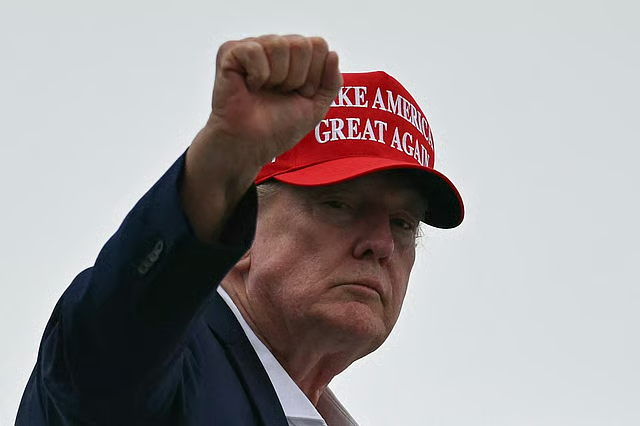
Donald Trump’s latest warning to Oman has intensified questions about US leverage during the continuing Strait of Hormuz crisis.
The US president has repeatedly threatened military action against Iran while imposing deadlines and demanding concessions from Tehran. Several warnings have passed without the military responses Trump previously described.
Now, Trump has extended his warnings to Oman, threatening military action if Muscat interferes with US efforts involving Hormuz. His latest position comes as Oman discusses possible shipping arrangements with Iran.
Iran says it is finalising an agreement with Oman involving new maritime routes through the strait. Washington remains concerned about any arrangement that could strengthen Tehran’s influence over this major energy corridor.
The Strait of Hormuz carries major international energy flows and remains strategically important for Gulf economies. Restrictions there have therefore created wider concerns for shipping and regional energy security.
Trump issued one of his strongest warnings toward Iran on July 22. He said Washington would destroy an Iranian bridge or power plant for every Iranian attack on a ship.
The warning followed earlier threats and deadlines directed at Tehran. However, those deadlines expired without the military action Trump had threatened.
The UAE later reported attacks involving Abu Dhabi National Oil Company vessels. Emirati authorities linked those attacks to Iran, according to the source material.
Washington did not announce retaliatory strikes against Iranian infrastructure following those reported attacks. Trump has previously cited diplomatic developments when explaining decisions to avoid military escalation.
However, negotiations have repeatedly failed to produce a lasting settlement between Washington and Tehran. That pattern has raised questions about how effectively repeated threats influence Iran’s calculations.
US leverage depends partly on whether adversaries believe Washington will enforce declared consequences. Repeated warnings without action can therefore create challenges for any future threat.
Iran now appears willing to test that dynamic as negotiations and tensions continue around Hormuz. The situation also places Oman in an increasingly sensitive diplomatic position.
Muscat has maintained a longstanding role as an intermediary between Washington and Tehran. That position makes Oman important as the United States seeks options for resolving the Hormuz standoff.
Danny Citrinowicz, a former head of the Iran branch of Israeli military intelligence, criticised Washington’s approach. He argued that threats against Oman could further damage US standing across the Gulf.
Citrinowicz said Gulf states remain disappointed with Washington’s wartime performance and its failure to protect them. He also argued that threats against Oman would not strengthen the US regional position.
According to his assessment, Trump may fear that an Iran-Oman shipping agreement could influence other Gulf states. Those states could potentially support a new Hormuz arrangement and urge Washington to lift its maritime restrictions.
That possibility leaves Trump facing a difficult decision between further escalation and accepting a negotiated arrangement. Citrinowicz described both choices as difficult options for the administration.
US Democratic Senator Mark Kelly has also questioned Trump’s decision to threaten Oman. Kelly, a US Navy veteran, described Oman as a US security partner.
He also called Oman critical to negotiations with Iran. His comments highlight concerns within Washington about the potential consequences of escalating pressure against Muscat.
Trump’s current approach also contrasts with his earlier criticism of US foreign policy. During Barack Obama’s presidency, Trump criticised Obama for failing to enforce warnings against Syria.
At the 2016 Republican convention, Trump described Obama’s handling of Syria’s chemical weapons red line as a humiliation. Trump argued at the time that unenforced threats carried little credibility.
In 2018, Trump also declared that the United States would no longer make empty threats. He said he would keep promises made as president.
The current Hormuz confrontation has therefore created an unusual test of that earlier position. Iran continues to resist US pressure, while Oman pursues negotiations with Tehran.
US leverage now depends not only on individual threats against Iran or Oman. It also depends on how Washington’s adversaries and regional partners interpret those warnings.
For Gulf states, the dispute carries broader implications for security cooperation and maritime stability. Any prolonged restrictions around Hormuz could also affect commercial planning and regional energy interests.
Oman’s intermediary role gives Muscat particular importance as Washington and Tehran weigh their next moves. At the same time, continued US pressure could complicate Oman’s efforts to facilitate negotiations.
The immediate outlook remains uncertain as Iran and Oman work on shipping arrangements. Washington must also determine whether further pressure or renewed diplomacy can achieve its objectives.
The outcome could influence perceptions of American security commitments across the Gulf. It could also shape how Iran and other regional actors respond to future US warnings.
Ultimately, US leverage faces a broader test beyond the immediate dispute over Hormuz. Washington’s next decisions will determine whether its threats strengthen deterrence or encourage further challenges.
