
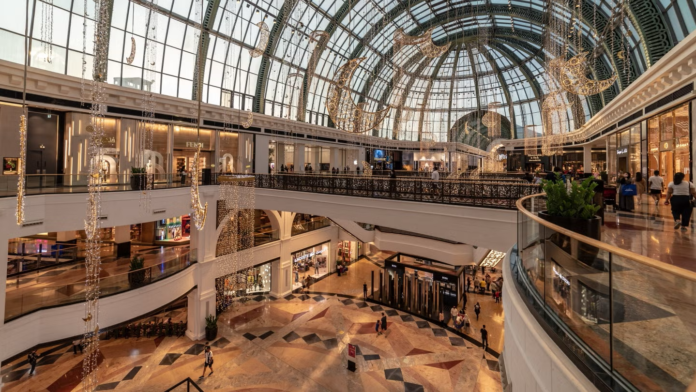
UAE luxury retail faces a sharp slowdown as regional tensions continue to affect consumer confidence. Major shopping destinations report significant declines in sales and visitor numbers. As a result, the sector experiences one of its most challenging periods in recent years.
Moreover, retail activity in Dubai shows the strongest impact. Boutiques at Mall of the Emirates recorded sales declines between 30% and 50% in March. In addition, overall footfall at the mall dropped by around 15%. Therefore, reduced customer traffic directly affected store performance.
At the same time, Dubai Mall experienced even steeper declines. Visitor numbers fell by nearly 50%, according to industry sources. Consequently, this drop signals a broader slowdown in purchasing activity across the city.
Abu Dhabi showed slightly more resilience compared to Dubai. The Galleria mall reported a sales decline of around 10%. However, the decrease still reflects ongoing pressure on consumer spending. As a result, all major retail hubs in the UAE face some level of impact.
UAE luxury retail includes global brands with strong market influence. These brands include LVMH, Kering, and Richemont. In addition, high-end labels such as Cartier, Chanel, Dior, Gucci, Louis Vuitton, and Rolex operate in these malls. Therefore, the slowdown affects both local markets and global luxury companies.
In addition, the current situation follows a broader decline in the global luxury sector. Since 2022, major luxury groups have lost significant market value. Consequently, companies face challenges across multiple regions, not only in the Middle East.
At the same time, regional instability triggered the latest downturn in the UAE. Tensions linked to the Iran conflict disrupted normal economic activity. Moreover, security concerns and uncertainty reduced consumer confidence. As a result, shoppers cut back on luxury spending.
UAE luxury retail also depends heavily on tourism and international visitors. However, uncertainty often reduces travel activity. Therefore, fewer tourists contribute to lower retail sales.
Meanwhile, Dubai remains one of the most attractive luxury markets globally. It offers competitive pricing, low taxes, and strong infrastructure. However, current conditions continue to limit its full potential.
Industry experts expect recovery to take time. Even if tensions ease soon, consumer confidence may return gradually. As a result, businesses prepare for a slow rebound.
UAE luxury retail faces a challenging environment shaped by regional instability and global market trends. Companies continue to adapt to changing conditions while waiting for recovery signals. Therefore, the sector remains under pressure in the near term.
