
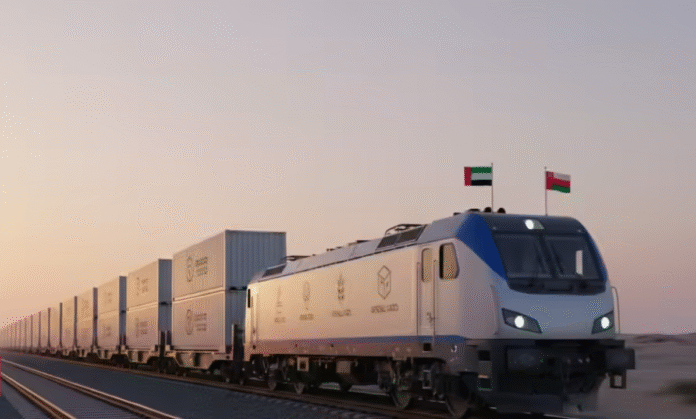
The United Arab Emirates and Oman have signed a historic agreement focused on boosting Gulf connectivity and driving sustainable growth. The new cross-border rail corridor will link Abu Dhabi with Sohar, creating a faster, greener, and more efficient route for trade across the region. This bold step will expand logistics, strengthen partnerships, and enhance long-term economic cooperation between both countries.
This collaboration signals a major leap forward for regional transport infrastructure. The UAE continues to lead innovative projects that promote efficiency and sustainability. Through this agreement, both nations aim to simplify trade operations, cut delivery times, and lower costs for exporters and importers.
Noatum Logistics and Hafeet Rail will operate the corridor, which will transport up to 193,200 containers every year. Each train will carry 276 containers on seven weekly trips between Abu Dhabi and Sohar. The route will handle essential goods such as pharmaceuticals, food, and consumer products, ensuring consistent supply and improved delivery schedules.
By shifting freight from trucks to trains, the UAE and Oman will reduce emissions and road congestion. This change directly supports their shared environmental goals. Both governments view this rail corridor as a vital step toward greener logistics and a stronger regional economy. The initiative also shows their dedication to boosting Gulf connectivity through smarter, cleaner transport solutions.
Moreover, the project aligns with economic diversification strategies in both nations. By improving logistics networks, the UAE and Oman can attract new investments and expand their non-oil sectors. Businesses will gain access to faster shipping routes, reduced operating costs, and more reliable trade systems.
Additionally, the new corridor will connect with existing transport infrastructure, including Khalifa Port and Fujairah Terminals. This integration will improve regional coordination, expand freight capacity, and create seamless trade movement across the Gulf. As a result, the entire region will enjoy greater efficiency and competitiveness.
Both governments plan to expand the network in the future, linking more Gulf cities and ports. These plans will further advance boosting Gulf connectivity while fostering economic unity. The project highlights how collaboration and innovation can drive growth and sustainability at the same time.
With this new cross-border rail link, the UAE and Oman are setting the stage for a more connected and environmentally conscious Gulf economy. Their partnership reflects a shared vision for progress, prosperity, and a cleaner, smarter future for all.
