
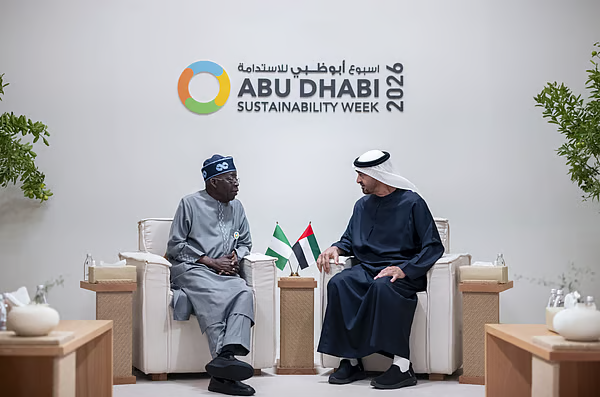
The UAE-Nigeria economic partnership represents a major step in boosting trade and investment between the two nations. It creates new opportunities for businesses, encourages innovation, and supports sustainable economic growth. By combining strategic strengths, both countries aim to expand global competitiveness and strengthen industry collaboration.
Leaders from the UAE and Nigeria signed the Comprehensive Economic Partnership Agreement (CEPA) on January 13, 2026, in Abu Dhabi. The agreement reduces tariffs and removes trade barriers, enabling smoother trade in technology, agriculture, energy, and precious metals. It also encourages public-private cooperation, improves supply chains, and helps small and medium enterprises expand internationally.
Together, these measures provide a solid foundation for long-term economic growth and stability.
Bilateral non-oil trade has already shown strong growth. In 2024, trade reached $4.3 billion, a 55 percent increase from the previous year. During the first nine months of 2025, trade totaled $3.1 billion, reflecting sustained confidence in both markets.
By leveraging the UAE’s role as a global trade hub and Nigeria’s growing economy, the agreement strengthens investment and collaboration.
The CEPA aligns with the UAE’s foreign trade strategy, which aims to raise non-oil trade to $1.1 trillion by 2031. In 2024, the program helped achieve $810 billion in non-oil trade, up 14 percent from 2023. With 32 agreements finalized and 14 already in force, the program reflects the UAE’s commitment to rules-based trade. It also promotes foreign investment, supports innovation, and ensures access to high-potential sectors in both countries.
Analysts predict the UAE-Nigeria economic partnership will accelerate opportunities in energy, technology, and agriculture. Investors are likely to explore new ventures, while SMEs benefit from simplified procedures and lower trade barriers.
By integrating markets and promoting cooperation, the agreement strengthens both economies and sets a regional example. Ultimately, the UAE-Nigeria economic partnership positions both countries as leaders in trade, investment, and sustainable economic growth.
