
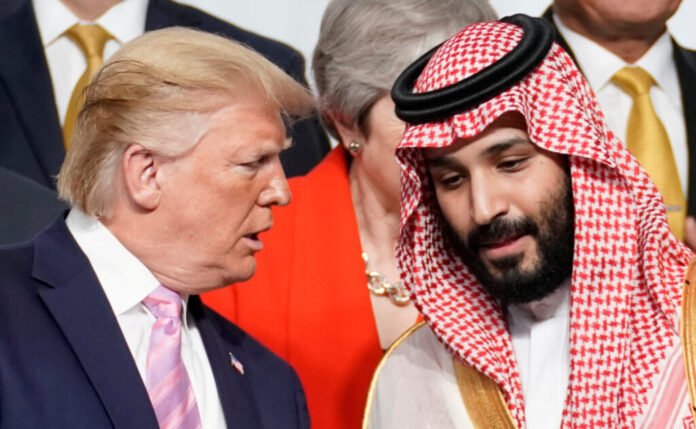
When former U.S. President Donald Trump lands in Riyadh on Tuesday, he will be welcomed with grand ceremonies and lavish receptions. The visit promises discussions of $1 trillion in investments, reflecting the strong economic ties between the U.S. and Saudi Arabia. However, the raging war in Gaza has denied Trump one critical goal he has long pursued: Saudi-Israel normalization. Trump’s setback in Riyadh highlights the ongoing challenges in Middle East diplomacy.
Behind the scenes, U.S. officials have been pressing Israel to agree to an immediate ceasefire in Gaza. According to two Gulf sources close to official circles and one U.S. official, Saudi Arabia has made this a key condition for restarting normalization talks. Trump’s setback in Riyadh stems directly from this precondition, which remains unmet.
Steve Witkoff, Trump’s Middle East envoy, recently expressed optimism about expanding the Abraham Accords. Speaking at the Israeli embassy in Washington, he predicted progress in the coming year. “We think we will have some or a lot of announcements very, very shortly,” Witkoff said. His comments suggested that Trump’s setback in Riyadh might be temporary if diplomatic breakthroughs occur. Witkoff is expected to join Trump during his visit to the Middle East, underscoring the importance of the region in Trump’s foreign policy strategy.
However, obstacles remain. Israeli Prime Minister Benjamin Netanyahu has opposed a permanent ceasefire in Gaza. He has also resisted any steps toward the creation of a Palestinian state. Two sources familiar with the talks stated that this resistance makes progress with Riyadh unlikely. Saudi Arabia still does not recognize Israel as a legitimate state, keeping the two powerful economies without formal diplomatic ties.
Supporters of normalization believe that formal ties between Saudi Arabia and Israel would bring stability and economic growth to the region. They also argue that it would counter Iran’s influence. Yet, according to six sources—two Saudi, two U.S., and two diplomatic officials—the topic has been separated from broader economic and security discussions. Trump’s setback in Riyadh is a direct result of this diplomatic deadlock.
Saudi Arabia’s de facto ruler, Crown Prince Mohammed bin Salman, has outlined his stance on the issue. According to Dennis Ross, a former U.S. negotiator, the Crown Prince demands an end to the Gaza war and a credible path toward a Palestinian state. Only then will he consider re-engaging in normalization talks. This condition remains a major roadblock to Trump’s foreign policy ambitions in the Middle East.
As Trump’s visit to Riyadh unfolds, the prospect of Saudi-Israel normalization remains distant. Trump’s setback in Riyadh serves as a reminder of the complexities of Middle Eastern diplomacy. Without significant changes on the ground in Gaza, Saudi Arabia is unlikely to alter its stance. For now, Trump’s vision of expanded Abraham Accords seems just out of reach.
