
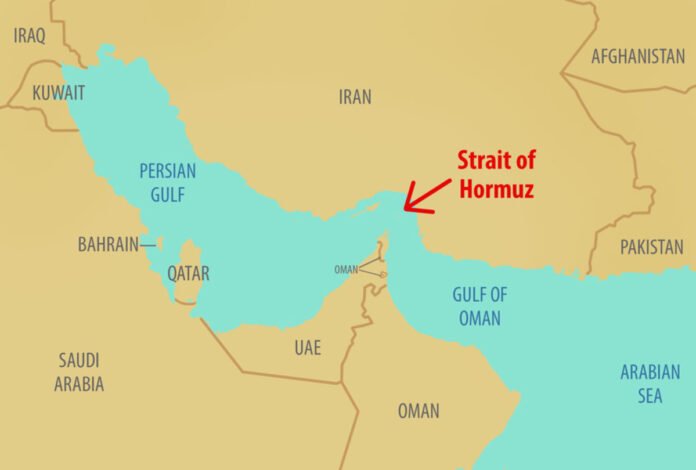
The Strait of Hormuz crisis has heightened global concern over energy and technology sectors. Analysts warn that disruptions in this key shipping corridor directly impact AI chip production and semiconductor supply chains.
The Gulf shipping lanes carry critical oil and gas supplies that fuel energy-intensive industries. Consequently, any interruption could ripple across global markets, particularly in AI and semiconductor sectors. Recently, military tensions prompted the United States to pledge protection for maritime navigation in the region.
South Korea and Taiwan, which produce the majority of the world’s DRAM, NAND memory, and advanced processing chips, rely heavily on Gulf liquefied natural gas. Both nations import large volumes from Qatar and the UAE. Therefore, prolonged disruptions in the Strait of Hormuz could threaten electricity supplies vital to chip manufacturing.
In early March, Qatar halted LNG production at Ras Laffan Industrial City due to military attacks. QatarEnergy declared force majeure, temporarily suspending exports. This measure affects roughly one-fifth of global LNG supply. Asian markets reacted sharply, with South Korea’s KOSPI dropping 12 percent and Taiwan’s TAIEX falling 4.4 percent. Key technology companies, including Samsung Electronics, SK Hynix, and TSMC, suffered significant valuation losses.
Meanwhile, Japan, China, and India face less immediate risk. Their energy grids rely less on Gulf LNG compared to South Korea and Taiwan. However, both vulnerable nations are racing to secure alternative gas supplies, while storage capacities remain limited. South Korea stores less than two months of imports, and Taiwan stores less than one month.
Australia and the United States, major LNG exporters, could capitalize on rising spot market demand. Flexible contracts and increased exports may partially offset disruptions caused by the Strait of Hormuz crisis. Experts note that any prolonged instability could severely affect semiconductor output, delaying AI hardware production worldwide.
Long-term, the crisis underscores the need for South Korea and Taiwan to diversify energy sources. Solar, wind, and nuclear alternatives could reduce dependence on volatile regions. Policymakers are urged to accelerate renewable energy projects and secure more resilient supply chains.
In conclusion, the Strait of Hormuz crisis threatens not only energy and transportation sectors but also the global AI and semiconductor industries. Rapid responses and international cooperation remain crucial to preventing wider economic and technological fallout.
