
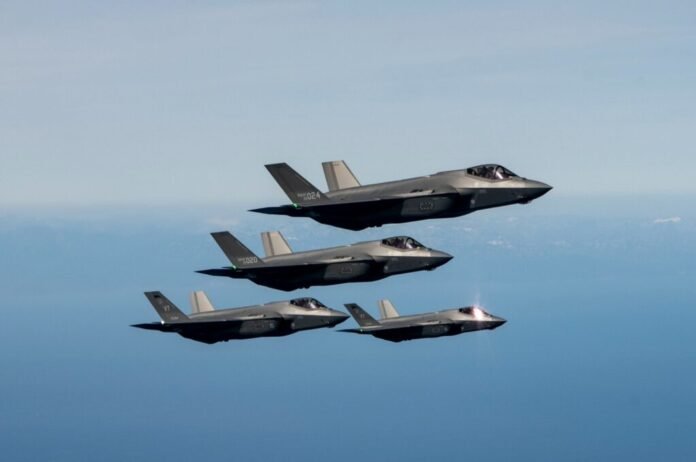
Saudi Arabia is at the center of a potential U.S. F-35 fighter jet sale, which Israel insists must advance normalization with Jerusalem. This development places Saudi Arabia in a pivotal role in shaping regional security. Moreover, it shows how arms deals increasingly connect to diplomatic goals. Clearly, advancing normalization is central to how this military agreement could move forward.
The sale comes ahead of an expected White House meeting between President Trump and Saudi Crown Prince Mohammed bin Salman. Saudi Arabia is set to discuss the F-35 deal, ongoing security agreements with the U.S., and the possibility of establishing normalized relations with Israel. Last month, Trump reportedly told the Saudi leadership that the end of the Gaza conflict creates a strategic opportunity for Saudi Arabia to pursue normalization.
Israeli officials emphasized that any transfer of F-35 jets must include diplomatic commitments. While Israel opposed similar sales to Turkey, officials see the Saudi deal as different. If tied to normalization, it could strengthen regional stability. Israel also expects that advancing normalization will accompany any military transfer, making Saudi Arabia’s diplomatic choices critical.
Currently, Israel is the only country in the region with F-35 jets. Saudi Arabia receiving them could shift the regional military balance. Israel aims to maintain its qualitative military edge (QME), a principle reinforced by U.S. law in 2008. Therefore, Saudi Arabia must navigate security guarantees and operational restrictions to avoid tension with Israel.
Previous deals, like the 2020 Abraham Accords, show how normalization affects arms transfers. Israel allowed F-35 sales to the UAE under strict security rules. Saudi Arabia will likely face similar safeguards. Israeli officials also insist that jets should not operate from bases near Israel’s western border.
U.S. officials have informed Saudi leaders about these conditions. However, major gaps remain. Israel wants a credible, time-bound path for a Palestinian state before fully supporting the deal. Saudi Arabia’s response will be decisive. Observers hope Trump’s meeting encourages direct talks, bridges differences, and lays out a roadmap for normalization.
Ultimately, the F-35 sale highlights Saudi Arabia’s central role in shaping regional security and diplomacy. How Riyadh manages this opportunity will determine whether the deal can advance normalization efforts in the Middle East.
