
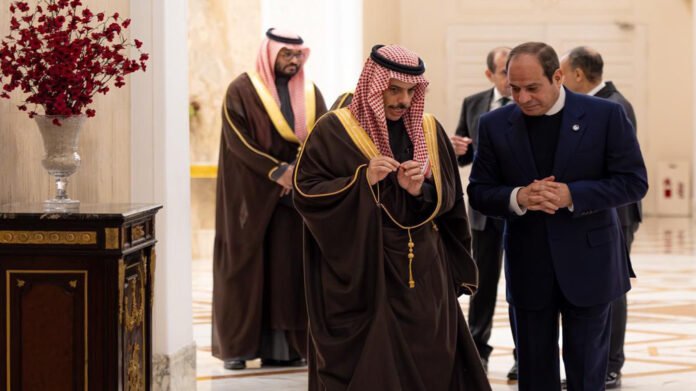
Saudi Arabia continues advancing regional stability through coordinated diplomacy, as it works closely with Egypt on key crises. From the start, Saudi regional leadership shaped talks on Yemen, Sudan, and the Horn of Africa. These efforts aim to lower tensions, protect sovereignty, and promote political solutions.
First, Saudi Arabia and Egypt confirmed shared positions during high-level meetings in Cairo. Officials stressed peaceful solutions to ongoing conflicts. Moreover, they emphasized respect for countries’ borders. This alignment shows a shared commitment to regional order.
Additionally, Yemen was a main focus of the talks. Saudi Arabia promoted open dialogue among Yemeni groups. Furthermore, officials supported political processes led by Yemenis themselves. As a result, Riyadh positioned talks as the main way forward.
At the same time, Saudi Arabia urged calm among competing groups. Officials warned against moves that increase divisions. Therefore, the kingdom strengthened its role as a mediator. Egypt agreed with this approach during discussions.
Meanwhile, Sudan was another major focus. Saudi Arabia supported stability through state institutions. Moreover, officials stressed dialogue over military action. Consequently, Riyadh worked with partners seeking a unified Sudanese framework.
In parallel, Saudi Arabia focused on the Horn of Africa. The area holds important sea routes. Therefore, Riyadh confirmed support for recognized governments. Officials also stressed the importance of unity and sovereignty in the region.
Additionally, Saudi Arabia addressed growing Gulf rivalries carefully. While differences exist with regional partners, Riyadh avoided escalation. Instead, officials focused on talks and long-term peace. This approach strengthened Saudi regional leadership during uncertain times.
At the same time, Egypt’s support improved Saudi Arabia’s diplomatic position. Cairo’s backing added strength to Riyadh’s initiatives. Together, both countries showed unity on sensitive regional issues.
Furthermore, Saudi Arabia linked regional stability to Red Sea security. Officials highlighted the need for safe shipping routes. As a result, economic and security concerns shaped diplomatic priorities. This approach increased Saudi Arabia’s influence.
Beyond conflict zones, Saudi Arabia emphasized cooperation. Officials promoted dialogue and mediation. Moreover, they highlighted coordination with Arab partners. This strategy aimed to reduce divisions.
Overall, these developments show Saudi Arabia’s growing diplomatic role. The kingdom balanced influence with caution. Furthermore, it advanced solutions through talks, not conflict.
As regional challenges continue, Saudi Arabia keeps focusing on diplomacy. This approach supports peace and cooperation. Ultimately, Saudi regional leadership stays central to shaping Middle East affairs.
