
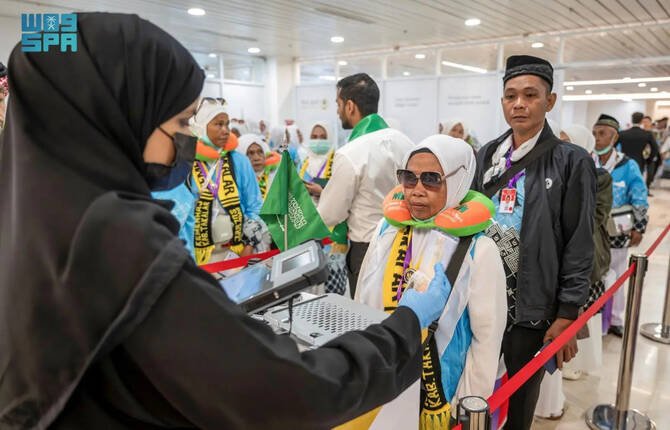
The Makkah Route Initiative continues transforming the Hajj travel experience for thousands of pilgrims arriving in Saudi Arabia each year. The program, which uses streamlined procedures and digital technology, now helps travelers complete entry formalities before boarding flights to the Kingdom.
One Indonesian pilgrim described the initiative as a major improvement after waiting more than a decade to perform Hajj. Khairiyah bint Muhammad Bakri, from North Maluku in Indonesia, said the process allowed her to focus on the spiritual meaning of the pilgrimage instead of travel stress and delays.
Bakri first planned to perform Hajj in 2013. She explained that the long wait strengthened her patience and faith over the years. Now, she says, modern travel procedures have made the journey smoother and more organized.
At Sultan Hasanuddin International Airport in Makassar, Saudi teams process pilgrims before departure. Travelers complete passport checks, customs procedures, and baggage arrangements before boarding their flights. After landing in Makkah or Madinah, pilgrims can head directly to their accommodations without long airport processing times.
Saudi authorities introduced the Makkah Route Initiative to improve efficiency during one of the world’s largest annual religious gatherings. The program operates under the Ministry of Interior with support from several government agencies.
Officials expanded the initiative this year to 17 international ports across 10 countries. Since its launch in 2017, the program has assisted more than 1.25 million pilgrims. Authorities say the effort supports Saudi Arabia’s wider modernization plans under Vision 2030.
Technology plays a major role in the system. The Saudi Data and Artificial Intelligence Authority provides digital infrastructure and AI-supported tools that help manage procedures accurately and quickly. Technical teams also monitor operations to maintain smooth movement from airports to the holy cities.
Many Indonesian pilgrims departing from Makassar praised the system for reducing waiting times and easing physical exhaustion during travel. They said faster procedures help pilgrims prepare mentally and spiritually for Hajj rituals.
The Makkah Route Initiative also reflects Saudi Arabia’s efforts to manage growing pilgrim numbers more effectively. Every year, millions of Muslims travel to the Kingdom to perform Hajj, one of Islam’s five pillars. Last year alone, more than 1.67 million pilgrims completed the pilgrimage, according to official figures.
Indonesia remains the largest source of Hajj pilgrims globally, followed by Pakistan, India, and Bangladesh. This large international movement requires extensive coordination between Saudi authorities and participating countries.
For Bakri, however, the pilgrimage represents more than organization and logistics. She described Hajj as a powerful gathering of Muslims united through worship, faith, and shared purpose.
The Makkah Route Initiative aims to preserve that spiritual focus by reducing stress during travel. Saudi officials hope the program will continue improving the pilgrimage experience while maintaining efficiency, dignity, and comfort for millions of worshippers arriving from around the world.
