
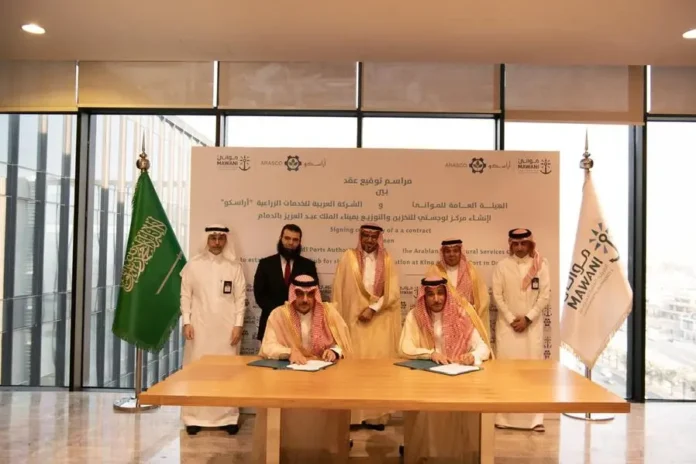
Saudi Arabia is expanding food logistics capacity with a $53.2 million deal to develop a new facility at King Abdulaziz Port in Dammam. The project aims to strengthen national supply chains and support the Kingdom’s broader economic goals.
The agreement was signed by the Saudi Ports Authority and Arabian Agricultural Services Co. (Arasco), highlighting collaboration between public and private sectors. This deal also aligns with Saudi Arabia’s National Transport and Logistics Strategy.
The facility will cover 40,000 square meters and enhance the port’s handling of essential food commodities. Importantly, the project includes advanced grain storage silos capable of storing up to 100,000 tonnes, bolstering the Kingdom’s strategic grain reserves.
Furthermore, the logistics hub will feature a dedicated vehicle-loading area, modern conveyor belt systems, and specialized ship-unloading equipment connecting Berths 37 and 39. These upgrades will streamline operations, reduce cargo turnaround times, and integrate port activities with the wider transport network.
Officials emphasized that expanding food logistics capacity also creates economic and social benefits. The project will create over 3,000 direct and indirect jobs, boosting local employment and developing skills.
Additionally, the new hub will strengthen national and regional distribution networks, providing value-added services to support broader economic growth. The facility is set to attract international logistics firms, further establishing Saudi Arabia as a regional logistics center.
King Abdulaziz Port already serves as a critical gateway linking the Kingdom to global markets. The port has 43 fully operational berths and handles more than 105 million tonnes of cargo and containers annually. The new investment will enhance its infrastructure, capacity, and operational efficiency.
Experts note that expanding food logistics capacity is vital for Saudi Arabia’s food security and economic resilience. By modernizing port infrastructure and storage systems, the country can efficiently manage supply chains and meet rising domestic and regional demand.
This development reflects Saudi Arabia’s ongoing efforts to support Vision 2030. It combines strategic planning, international collaboration, and infrastructure modernization to reinforce the Kingdom’s role as a global logistics hub.
