
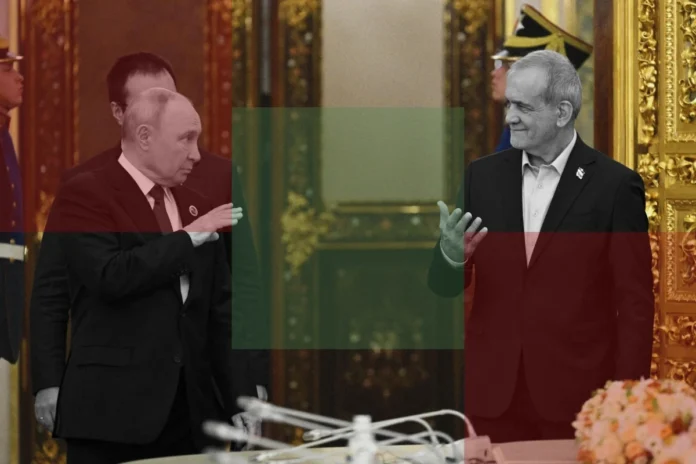
As tensions between Washington and Tehran continue, Russian Mediation has re-emerged as a possible route towards ending the conflict. Moscow maintains close ties with Iran while President Vladimir Putin also has a relationship with US President Donald Trump. These connections could give Russia an opportunity to bring both sides towards negotiations.
However, the prospect of mediation comes with significant complications. The United States and Iran maintain sharply different positions, while Russia has interests of its own. Although Moscow could benefit from a negotiated settlement, its influence over both governments remains uncertain.
High-level contacts between Russian and Iranian officials have continued since the war began. Tehran may increasingly view Moscow as a potential diplomatic partner as the American economic blockade affects Iranian ports. Meanwhile, Russia sees an opportunity to strengthen its international position through successful negotiations.
Russia’s strategic relationship with Iran
Russia considers Iran an important partner in its wider geopolitical strategy. Their cooperation supports Moscow’s interests across the South Caucasus, Caspian Sea and Central Asia. Both governments also coordinate on economic and political initiatives intended to support a multipolar international order.
Their relationship gained a formal framework through a Comprehensive Strategic Partnership Treaty. The two countries signed the 20-year agreement in January 2025 and ratified it later that October. It covers trade, nuclear energy, infrastructure, cybersecurity, media and counterterrorism cooperation.
Nevertheless, the treaty does not require either country to provide military assistance during a war. Instead, both governments agree against supporting an aggressor targeting the other. They also pledge to resist third-party sanctions and strengthen cooperation against shared threats.
Russian officials frequently refer to these provisions when explaining Moscow’s refusal to provide military support. Consequently, Tehran cannot assume that its strategic partnership guarantees direct Russian intervention during conflict.
Iran’s participation in international organisations also strengthens its importance to Moscow. It joined the Shanghai Cooperation Organisation as a full member in 2023. Subsequently, it became a full BRICS member at the beginning of 2024.
Russia also wants to prevent the collapse of Iran’s current government. Losing Tehran would represent another major setback following the departures of Bashar al-Assad in Syria and Nicolás Maduro in Venezuela. Moreover, such an outcome could weaken confidence among Moscow’s partners elsewhere.
Regional security and economic interests
Moscow wants Iran to retain regional influence without becoming overwhelmingly powerful. A collapse could create security problems, including drug trafficking and extremist threats reaching Central Asia. Furthermore, instability could allow Washington or Beijing to establish regional security arrangements without Russian involvement.
Russia also wants to preserve a balance between Iran, Gulf Arab states and Israel. Maintaining relationships across competing regional powers helps Moscow retain diplomatic influence. However, the Kremlin firmly opposes Iran acquiring nuclear weapons, fearing wider regional proliferation.
Economic interests provide another reason for Russia to support a settlement. The conflict has disrupted major projects connecting Russian markets with international trade routes. One affected initiative is the International North-South Transport Corridor, which links Iranian ports with routes extending towards the Baltic Sea.
The war has also interrupted plans for a joint liquefied natural gas export hub. Russia and Iran agreed to develop the facility on Iran’s coast following the suspension of Russian gas exports. However, US strikes in southern Iran disrupted the project and could require additional investment.
Nuclear cooperation faces similar uncertainty. In October 2025, the two countries reached a preliminary agreement concerning the proposed $25 billion Hormoz nuclear power plant. Russia also worked on another unit at the Bushehr nuclear facility before personnel withdrew during US and Israeli bombing.
Russian investment in Iran has grown in recent years. Iran’s ambassador to Moscow reported $4.2 billion in Russian foreign direct investment during the 2024–25 financial year. He also expected investment in Iranian gas projects to reach $8 billion.
Nevertheless, Russia could face stronger competition if Western sanctions against Iran disappear. Tehran would potentially increase oil exports, attract international investment and challenge Russian suppliers. Therefore, Moscow must balance its diplomatic ambitions against possible economic disadvantages.
Can Moscow persuade Washington and Tehran?
Putin hopes his relationships with both governments will help secure Russia a prominent negotiating role. However, Washington initially rejected Moscow’s offers and Trump urged Putin to focus on ending the Ukraine war. More recently, the American president has appeared more receptive to Russian involvement.
Still, the positions of Washington and Tehran remain far apart. Trump has suggested that the United States already achieved victory and shifted attention towards domestic priorities. Meanwhile, Iran wants sanctions lifted and believes recent American and Israeli election results strengthen its negotiating position.
Analysts face serious questions about whether Moscow has enough influence to bridge these differences. Russia lacks the resources and bargaining power needed to force either side towards compromise. In addition, divisions within Iran over its relationship with Moscow could weaken Tehran’s confidence.
The Kremlin may nevertheless draw on its experience during negotiations over the 2015 nuclear agreement. That arrangement eased financial pressure on Iran in exchange for international inspections of its nuclear facilities. Russia also received uranium enriched to 20 percent from Iran under the agreement.
A possible Russian proposal could involve Tehran abandoning its military nuclear programme and surrendering highly enriched uranium. Iran denies pursuing such a weapons programme. In return, Moscow could support peaceful nuclear development and offer modern aircraft and air defence systems.
However, previous delays in delivering Russian S-300 air defence systems could make Tehran cautious. Iran may also question whether Moscow would provide meaningful assistance if fighting resumed. Russia’s responses during conflicts involving Iran’s allies have reinforced those doubts.
For Washington, Moscow’s usefulness would depend on its ability to secure meaningful Iranian concessions. If Putin cannot influence Tehran’s position, Trump may see little value in Russian involvement. Ultimately, Russian Mediation faces substantial obstacles because Moscow must protect its interests while satisfying both sides.
Russia’s immediate priority appears to be preventing Iran’s defeat or a government change that shifts Tehran towards Western powers. Yet its diplomatic ambitions may exceed its ability to deliver an agreement. The outcome will depend on whether Washington, Tehran and Moscow can find enough common ground to pursue negotiations.
